
Avoiding Common Boat Ownership Mistakes: A Guide to Effortless Luxury Boating in 2026
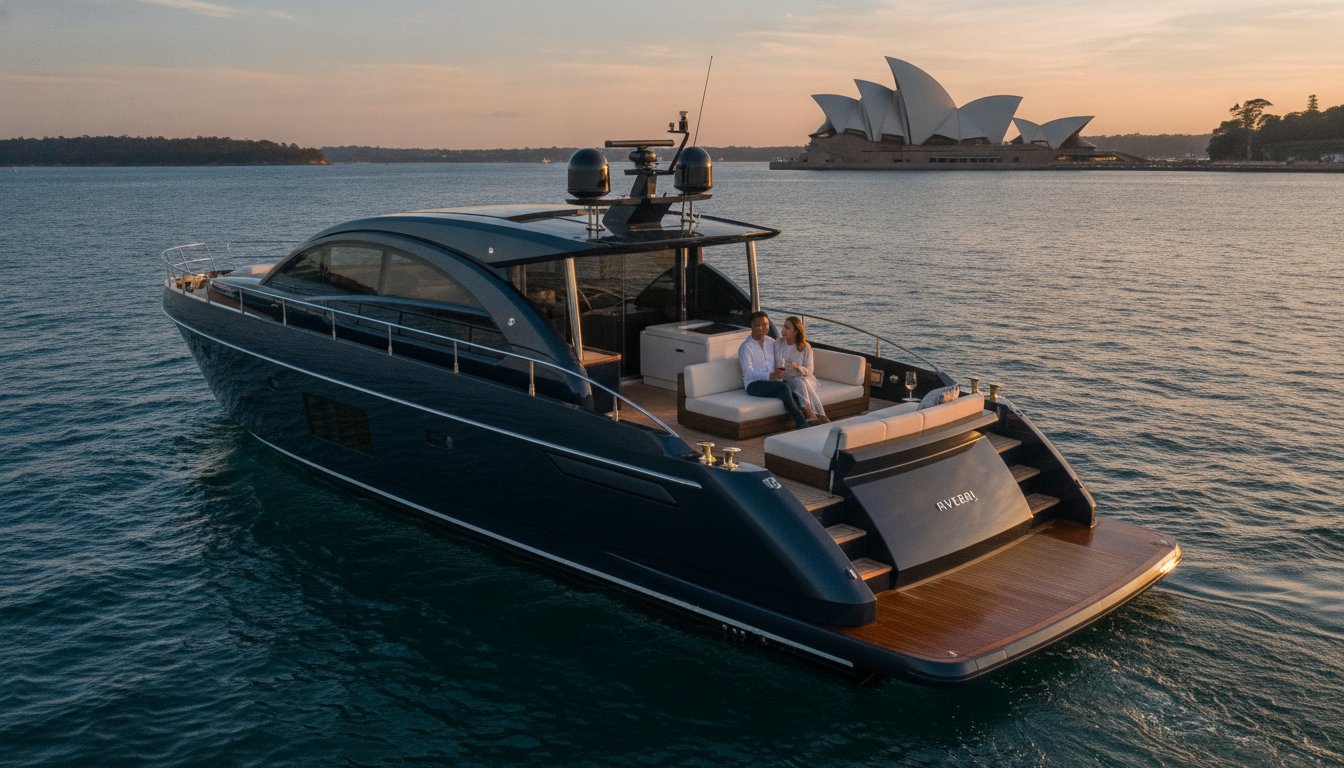
The most expensive mistake in luxury boating isn't a mechanical failure; it's the failure to account for the logistical "time tax" of sole ownership. While the dream of cruising the harbour is captivating, the reality often involves a relentless cycle of administrative burdens and unforeseen maintenance that can cost between 8 to 12 per cent of your vessel's value every single year. If you're looking for a lifestyle defined by freedom rather than chores, avoiding common boat ownership mistakes starts with rethinking how you access the water.
We understand that your time is your most precious asset. You've likely felt the frustration of a weekend lost to engine checks or the stress of organising berthing and compliance. This guide promises to reveal the logistical and financial pitfalls of traditional ownership and, more importantly, how to bypass them for a seamless, indulgent experience. We'll look at the rising shift toward managed solutions that offer predictable annual costs and a pristine vessel, ensuring your only responsibility is deciding which direction to point the bow.
Key Takeaways
- Calculate your true "time-to-use" ratio to ensure your weekends are spent cruising the coast rather than managing mechanical repairs.
- Master the art of avoiding common boat ownership mistakes by choosing a vessel that fits your actual daily lifestyle instead of rare, high-capacity events.
- Protect your investment from the harsh Australian marine environment with a proactive maintenance strategy that prevents costly saltwater damage before it starts.
- Simplify the administrative burden of maritime compliance and insurance through professional oversight that prioritises your peace of mind.
- Discover how yacht syndication provides a walk-on walk-off lifestyle with predictable costs and a vessel kept in showroom condition.
Underestimating the True Complexity of Private Boat Ownership
The initial purchase of a luxury vessel is often the most straightforward part of the journey. Many Australian owners enter what is known as the "honeymoon phase," where the excitement of the acquisition masks the logistical reality of the commitment. It is a telling statistic in the marine industry that a high volume of private owners sell their vessels within just twenty-four months. This rapid turnover usually stems from a lack of preparation in avoiding common boat ownership mistakes, particularly regarding the relentless demand on both time and capital.
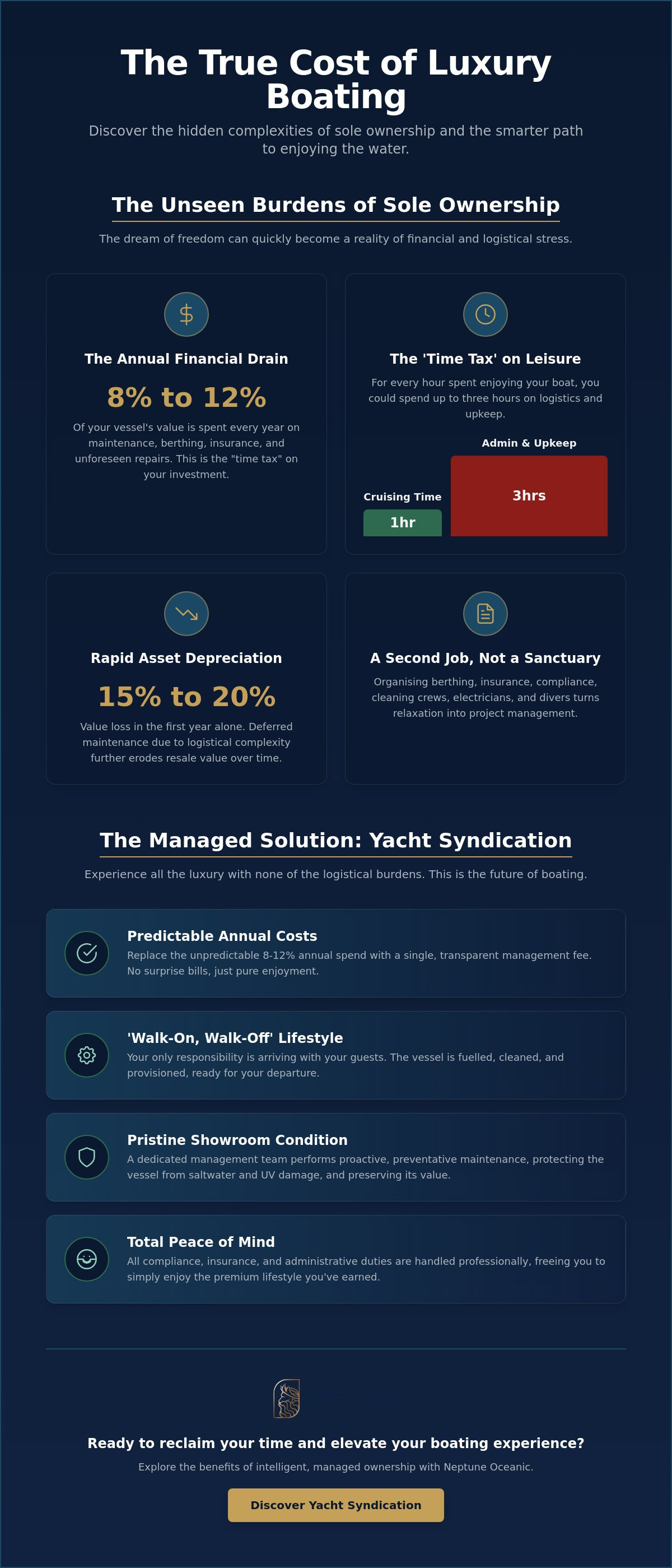
The "time-to-use" ratio is a metric every prospective owner should calculate. For every hour spent cruising the Whitsundays or Sydney Harbour, a sole owner can easily spend three hours on administration, cleaning, or mechanical oversight. Vessel logistics is the management of berthing, insurance, and compliance. When these tasks are managed individually, the vessel often stops being a sanctuary and starts being a source of weekend stress. Gaining a deep understanding of the complexities of boat ownership is essential for anyone looking to maintain a premium lifestyle on the water without the associated headaches.
The Hidden Financial Drain Beyond the Bill of Sale
The purchase price is merely the entry ticket to the show. In the Australian luxury market, a new boat can depreciate by 15 to 20 per cent in its first year. Beyond this, premium marina berths are increasingly scarce, with fees often calculated by the centimetre. Choosing a "cheap" boat is frequently a false economy; older vessels in harsh saltwater environments typically require significantly more than the standard 8 to 12 per cent of their value in annual upkeep to remain seaworthy and safe.
The Logistical Burden: Why Boating Becomes a Second Job
Maintaining a yacht in showroom condition requires a rotating cast of specialised trades, from marine electricians to professional divers and cleaning crews. For a private owner, coordinating these schedules is a logistical puzzle. DIY management often leads to "deferred maintenance," which quietly erodes the vessel's resale value and reliability over time. The psychological shift from "relaxation" to "project management" is the primary reason the dream fades for so many. This is why discerning enthusiasts are increasingly moving toward yacht syndication shares to reclaim their leisure time while keeping their capital working harder.
Neglecting Preventative Maintenance and Saltwater Protection
The Australian coastline provides a magnificent backdrop for luxury boating, but the environment is undeniably harsh. Saltwater and high UV levels act as a constant abrasive on stainless steel fittings and delicate upholstery. One of the most vital aspects of avoiding common boat ownership mistakes is moving away from a reactive mindset. Waiting for a component to fail before addressing it is a high-risk strategy that often results in expensive emergency repairs and ruined holidays. Consistent hull inspections and regular antifouling are not just suggestions; they are requirements for maintaining the vessel’s speed and fuel efficiency. A well-maintained vessel is a testament to an owner's commitment to excellence and ensures that every moment on the water is defined by grace rather than technical anxiety.
Professional detailing is ultimately a strategy for asset protection rather than a simple exercise in aesthetics, serving to shield expensive materials from the corrosive effects of the sea. When you consider the financial implications of underestimating the true cost of neglect, the value of a structured approach becomes clear. Salt never sleeps, and a ship left to face the elements without a barrier will quickly show its age.
The Critical Nature of Regular Vessel Detailing
Salt air is incredibly invasive. It doesn't just sit on the exterior; it finds its way into the cabin, affecting fine finishes and intricate electronics. Engaging professional Vessel detailing services ensures that your yacht receives the specialised care it requires. High-end ceramic coatings and premium waxes do more than provide a deep shine. They seal the gelcoat against oxidation and staining, ensuring the vessel looks as spectacular in five years as it does today.
Mechanical Oversight and Preventative Cycles
The engine room is the heart of your experience. Sole owners often miss the subtle signs of wear on belts, hoses, or impellers that a trained eye would spot instantly. By following a dedicated vessel maintenance plan, you ensure that parts are replaced based on hours of use rather than waiting for a mid-season breakdown. This level of professional maritime oversight is far superior to ad-hoc repairs. It provides a level of reliability that allows you to simply step on board and enjoy the horizon. For those who prefer this frictionless approach, yacht syndication shares offer a managed solution where every mechanical detail is handled with precision.
Overlooking Maritime Compliance and Administrative Duties
The administrative side of yachting is where the dream of freedom often meets the reality of bureaucracy. Navigating the Australian maritime safety standards and registration requirements is a continuous commitment that often goes unnoticed until a critical deadline is missed. One of the most vital aspects of avoiding common boat ownership mistakes is recognising that compliance is a dynamic process, not a "one and done" task. From ensuring your radio licensing is current to managing the specific registration needs of a luxury vessel, the paperwork can quickly become a significant time-sink that erodes the joy of being on the water.
The mistake of inadequate insurance coverage is a particularly high-risk error for luxury assets in Australia. Many owners find themselves with policies that do not accurately reflect the market value or the specific operational risks of their vessel. Managing the various professional service providers and crew required for a larger yacht adds another layer of complexity. Instead of enjoying a quiet morning on the harbour, the owner often becomes a de facto human resources manager, coordinating schedules, verifying qualifications, and ensuring that every contractor meets the necessary safety protocols. It is a level of responsibility that can make the lifestyle feel more like a second job than a relaxed indulgence.
Safety Standards and Regulatory Compliance
Safety equipment is not a "set and forget" item. Maintaining a valid vessel compliance status throughout the year requires meticulous record-keeping and a proactive schedule. Fire suppression systems, life-rafts, and EPIRBs all have strict servicing intervals that must be adhered to without exception. Failure to document these checks can result in more than just a fine; it can provide grounds for an insurer to void a policy in the event of an incident. Professional maritime oversight ensures these critical safety benchmarks are always met, providing you with true peace of mind.
The Professional Management Alternative
For those who wish to bypass the administrative burden entirely, vessel management packages offer a sophisticated solution. These services remove the logistical weight by providing a single, reliable point of contact for all regulatory and administrative needs. This transition from being a "vessel manager" to a "vessel enjoyer" is the hallmark of a truly premium experience. By delegating the complexities of registration and compliance to experts, you reclaim the freedom that boating was intended to provide, ensuring every moment spent on board is dedicated to relaxation and connection.
Buying "Too Much Boat" for Your Actual Lifestyle
The allure of a grand vessel capable of hosting thirty guests for a New Year’s Eve celebration is undeniable. However, purchasing a yacht based on "peak usage" rather than your daily reality is a frequent error. Most luxury vessels in Australia are used for an average of only thirty days a year. This means for the remaining 335 days, the vessel sits idle, accumulating berthing fees and requiring constant maintenance. A core part of avoiding common boat ownership mistakes is recognising that excessive size often leads to restricted marina options and significantly higher overheads without providing a proportional increase in enjoyment.
The cost-per-use for a sole owner who cruises once a month is often ten times higher than that of a member in a managed shared ownership model. A boat is a "static asset" that suffers more from inactivity than from regular use. Seals dry out, batteries discharge, and fuel can degrade. By the time you're ready for your next voyage, you may find yourself spending your first day on board supervising repairs rather than relaxing. For a 30-foot boat, wet slip fees can range from $900 to $1,500 per month in premium locations. When you add the 8 to 12 per cent annual maintenance rule, the financial inefficiency of an underutilised vessel becomes stark.
Assessing Your Realistic Boating Calendar
Be honest about how many days you'll actually spend on the water. If you fall into the 30-day average, you're essentially paying for a year of expenses for a month of pleasure. Achieving hassle free yachting requires aligning the vessel's size and complexity with the time you can realistically commit to using it. Over-committing to a larger vessel than necessary often leads to the "static asset" trap, where the boat becomes a source of guilt rather than a gateway to freedom.
Fractional Ownership: The Antidote to Over-Commitment
The "right-sizing" philosophy is about paying for the time you actually use while still enjoying the luxury you deserve. Sophisticated boat share programs in Australia allow you to access larger, more prestigious yachts without the full financial and logistical overhead. It is a smarter entry into the lifestyle, providing the walk-on walk-off experience that sole ownership rarely delivers. If you're ready to experience the water without the weight of sole ownership, explore our yacht syndication shares to find a vessel that perfectly matches your lifestyle requirements.
The Managed Solution: Why Syndication is the Future of Boating
The traditional model of private yacht ownership is undergoing a significant shift. As we have explored, the logistical weight of maintenance, compliance, and underutilisation can quickly tarnish the prestige of owning a vessel. Syndication offers a modern alternative that prioritises the user experience above all else. By choosing this path, you are effectively avoiding common boat ownership mistakes that lead to burnout and financial inefficiency. Instead of managing a complex project, you are investing in a lifestyle that is defined by the walk-on walk-off boating experience, where every technical detail is handled by a team of dedicated professionals.
A professionally managed syndicate ensures your vessel remains in showroom condition year-round. This is not merely about a quick wash before you arrive. It involves a deep commitment to preventative care, ensuring the mechanical systems, upholstery, and gelcoat are maintained to the highest standards. One of the primary advantages of this model is the clarity of vessel management pricing. Rather than facing unpredictable repair bills or fluctuating marina fees alone, costs are shared transparently among the syndicate members. This predictability allows you to budget for your leisure time with absolute confidence, knowing that the "time tax" of ownership has been eliminated.
The Neptune Oceanic Standard of Excellence
At Neptune Oceanic, we act as the steady hand behind the scenes. Our approach combines high-end hospitality with rigorous maritime oversight, ensuring that every voyage is as seamless as the last. We take responsibility for the administrative burdens, safety audits, and mechanical schedules that often overwhelm private owners. This level of care is underpinned by a secure yacht share agreement, which provides a clear legal framework for your investment. We handle the complexities so you can focus on the connection and relaxation that a luxury vessel provides.
Next Steps: From Dreaming to Doing
Transitioning to a managed boating lifestyle is simpler than most realise. It begins with evaluating which vessel in our fleet aligns with your personal requirements and available time. We invite you to join a community of like-minded enthusiasts who value excellence and efficiency in equal measure. To see how we have refined this process to perfection, we encourage you to book a private viewing of our current fleet. View our current Yacht Syndication Shares and start your journey today.
Embrace the Future of Effortless Boating
The path to a truly seamless on-water lifestyle lies in shifting your focus from the relentless mechanics of sole ownership to the pure joy of the experience. Luxury should be effortless. By choosing professional management and right-sizing your vessel choice through syndication, you're effectively avoiding common boat ownership mistakes that lead to logistical fatigue and financial unpredictability. You have seen how the administrative burden and the aggressive Australian saltwater environment can erode your precious leisure time; now is the moment to choose a more sophisticated way forward that values your freedom.
Neptune Oceanic provides a gateway to this refined lifestyle through our professionally managed Australian fleet. Our structured co-ownership models offer total transparency and predictable costs, while our high-end hospitality and concierge services ensure your only task is to decide which harbour to explore next. We invite you to step into a world where every complexity is managed with precision behind the scenes, leaving you free to enjoy a vessel in showroom condition without the personal labour. Discover Effortless Luxury with Neptune Oceanic Yacht Shares and reclaim the freedom you deserve. The horizon has never looked more inviting.
Frequently Asked Questions
What is the biggest mistake first-time boat owners make in Australia?
The most significant error is underestimating the logistical "time tax" required to keep a luxury vessel seaworthy and compliant. Many owners focus purely on the purchase price but forget that for every hour of cruising, several hours of administration and maintenance are often required. Avoiding common boat ownership mistakes starts with recognising that a yacht is a complex asset requiring professional oversight to remain a sanctuary rather than a second job.
How much does it really cost to maintain a luxury yacht annually?
Annual maintenance for a luxury yacht typically ranges between 8 and 12 per cent of the vessel's market value. This budget covers essential services like antifouling, engine room audits, and hull inspections. Additionally, insurance usually costs 1 to 3 per cent of the hull value, while premium marina fees in Australia can range from $900 to $1,500 per month for a 30-foot boat. These costs are often more manageable when shared within a syndicate.
Is boat syndication better than sole ownership for a busy professional?
Yes, boat syndication is significantly better for busy professionals who value their leisure time over logistical control. It removes the burden of coordinating trades, cleaning crews, and maritime compliance. By choosing a managed model, you bypass the psychological shift from relaxation to project management. This allows you to focus entirely on the lifestyle benefits of boating while a dedicated team handles the complexities of vessel logistics behind the scenes.
Can I still use my boat whenever I want in a managed share program?
In a managed share program, you access the vessel through an equitable and transparent booking system. While you don't have the boat 365 days a year, the system ensures you have fair access to peak periods and weekends. This model is designed to match the 30-day average usage of most Australian boaters, providing you with the vessel when you actually have the time to enjoy it, without the idle-asset guilt.
What happens if the vessel needs major repairs in a syndicate?
When a vessel requires major repairs, the professional management team oversees the entire process from diagnostics to completion. Costs are typically covered by the syndicate’s reserve fund or shared among members as outlined in the yacht share agreement. This approach removes the stress of sourcing reliable shipwrights or marine electricians personally, ensuring the work is performed to a showroom standard by verified specialists who understand the vessel's specific history.
Do I need a special licence to participate in a yacht share program?
You generally only need a standard recreational marine driver licence to operate the vessel yourself. The specific requirements vary by Australian state, such as an RMDL in Queensland or a Boat Licence in New South Wales. If you prefer not to take the helm, many management packages can facilitate professional crew or skippers. This ensures you can enjoy the water regardless of your personal experience or licensing status, making the experience truly inclusive.
How does professional vessel management improve the resale value of a boat?
Professional management preserves resale value by maintaining a meticulous, verifiable service history and keeping the vessel in "showroom" condition. A yacht that has been consistently detailed and mechanically audited by experts is far more attractive to buyers than one with "deferred maintenance" from a sole owner. This proactive care prevents the typical 15 to 20 per cent first-year depreciation from being compounded by visible neglect or mechanical unreliability over time.
What is "walk-on walk-off" boating and how does it work?
"Walk-on walk-off" boating is a premium service where the vessel is fully prepared for your arrival and cleaned upon your return. The management team handles the refuelling, water tank top-ups, and pre-departure checks. When your journey ends, you simply secure the lines and walk away. It is the ultimate expression of effortless luxury, removing every chore associated with the sea so you can focus entirely on connection and relaxation.
Disclaimer
The content published on this blog reflects the views and experience of Neptune Oceanic and is provided for informational purposes only. While every effort is made to ensure accuracy, we make no representations or warranties regarding the completeness or suitability of any information for your individual circumstances. Nothing in this blog should be construed as financial, legal, or investment advice. All financial figures, cost estimates, and usage statistics are indicative only and may vary depending on vessel, location, and market conditions. Neptune Oceanic is a member of the Boating Industry of Australia (BIA).