
Interior Yacht Cleaning: The Ultimate How-To Guide for Australian Owners

What if the salt air that defines your freedom is quietly compromising the very luxury you've worked so hard to secure? Most Australian owners recognise the subtle frustration of finding a fine layer of grit on a leather helm or noticing the first signs of mildew after a humid week in the Whitsundays. It's a common struggle to maintain a pristine environment when the elements are constantly invited inside. Mastering interior yacht cleaning isn't just about aesthetics; it's about protecting the longevity of your investment against the harsh reality of the Australian coast.
You deserve a cabin that feels like a five-star retreat every time you step aboard, free from the lingering scents of salt and damp. This guide promises to help you maintain your vessel with the same care used by elite detailing teams, ensuring an odour-free, walk-on walk-off experience. We will explore the professional protocols for preserving high-end timber, managing humidity, and organising a maintenance schedule that keeps your vessel in showroom condition year-round.
Key Takeaways
- Understand why the unique Australian marine environment requires specialised protocols that go far beyond standard residential cleaning methods.
- Master a systematic, top-to-bottom approach to interior yacht cleaning that ensures every surface from overheads to bilges remains pristine.
- Learn effective strategies for managing salt intrusion and humidity to preserve luxury finishes and eliminate the dreaded "boat smell".
- Establish a practical maintenance schedule that balances quick post-voyage resets with thorough monthly deep-cleans.
- Discover how professional vessel management packages can provide a seamless "walk-on walk-off" experience while protecting your investment’s long-term value.
Setting the Standard for Interior Yacht Cleaning
Achieving a truly immaculate cabin requires a fundamental shift in perspective. At Neptune Oceanic, we refer to this as the "Neptune Standard," a level of finish where every surface is not just clean, but meticulously restored to its original lustre. Unlike a suburban home, a vessel is a dynamic environment constantly exposed to the corrosive nature of the Pacific and Indian Oceans. Interior yacht cleaning must therefore be viewed through the lens of preservation rather than just routine housekeeping. Residential protocols often fail in this setting because they don't account for the microscopic salt crystals that settle into soft furnishings or the way Australian humidity can turn a closed cabin into a breeding ground for mildew within days.
Every high-end yacht is a masterpiece of engineering and craftsmanship, featuring delicate materials that demand specialised care. Before you even lift a cloth, you must organise the space effectively. Clear the counters, stow personal items, and open the hatches to let the vessel breathe. This preparation allows you to identify areas where salt air might be dulling the shine of your timber or where moisture has begun to settle in the corners of the upholstery. A methodical approach ensures that no corner is overlooked and that the deep clean is as efficient as it is thorough.
The Psychology of a Pristine Saloon
A pristine saloon is more than just a visual delight; it's the foundation of owner pride and guest comfort. When you step aboard, the absence of clutter and the scent of a fresh, salt-free environment immediately signals that the weekend has begun. This level of maintenance directly influences the long-term asset value of your vessel. A well-kept interior suggests a well-managed engine room, providing peace of mind for both the owner and future buyers. It transforms a functional space into a genuine sanctuary at sea, where you can relax in total indulgence without the distraction of salt-grime or lingering odours.
Essential Tools and Marine-Safe Supplies
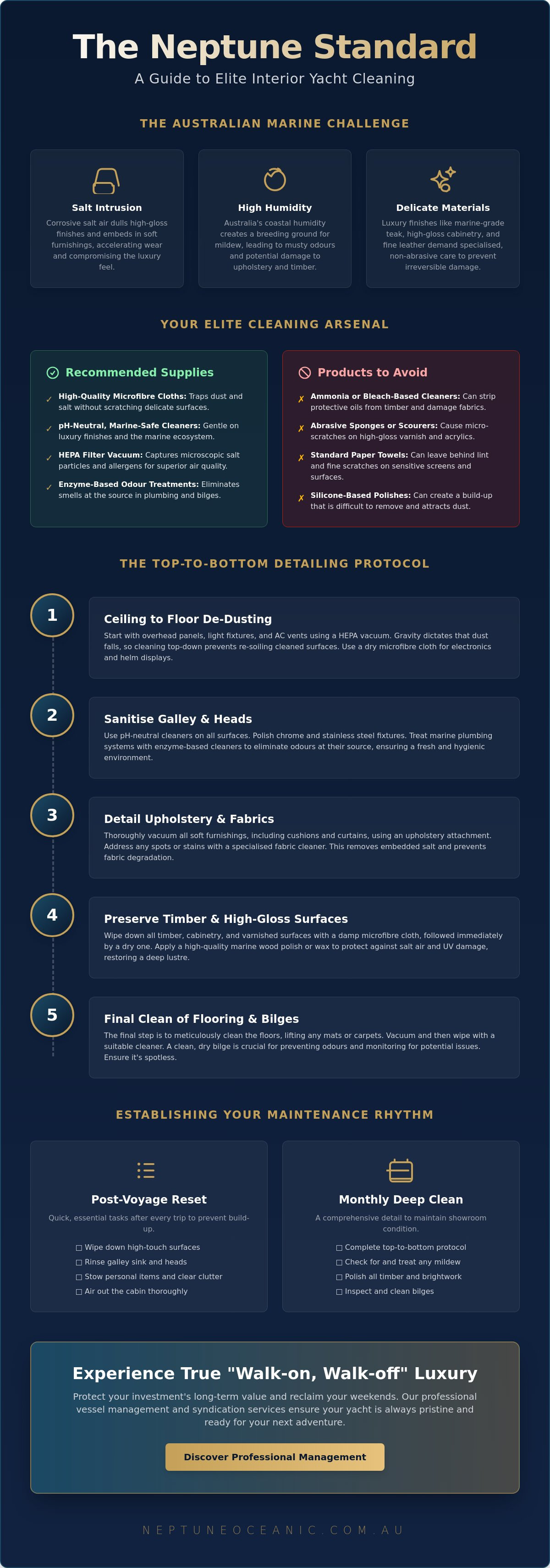
The choice of supplies can make or break your luxury finishes. Many common household cleaners contain harsh ammonia or bleach that can strip the protective oils from marine-grade teak and holly flooring. We recommend using pH-neutral, phosphate-free, and biodegradable agents that are gentle on both your vessel and the local marine ecosystem. High-quality microfibre cloths are essential to prevent the micro-scratches that common paper towels can leave on high-gloss cabinetry. Investing in the right tools, or engaging professional vessel maintenance and detailing, ensures these standards are met while protecting the integrity of your high-end fabrics and timber for years to come.
A Step-by-Step Guide to Detailing Luxury Marine Interiors
Precision is the hallmark of professional interior yacht cleaning. It isn't merely about tidying up; it's a methodical restoration of every square inch of your vessel's living space. To achieve a truly guest-ready finish, you must adopt a systematic approach that ensures no salt crystal or dust particle is left behind. This process begins with a clear plan, moving from the highest points of the cabin down to the very bilges. By following a structured routine, you maintain the "new boat" feel that makes yachting such a refined experience. For those who prefer to spend their weekends enjoying the horizon rather than scrubbing it, exploring yacht syndication shares offers a managed solution where this level of meticulous detail is handled for you.
Step 1: Ceiling to Floor De-Dusting
Gravity dictates the flow of a proper detail. Always start at the overhead panels and work your way down to prevent dust from settling on already-cleaned surfaces. Use a vacuum equipped with a HEPA filter to capture fine salt particles and allergens that standard domestic vacuums often miss. Pay particular attention to AC vents and the recesses of delicate light fixtures. For electronic displays and helm instruments, use a clean, dry microfibre cloth to avoid scratches. This top-down approach ensures that the air quality remains crisp and the surfaces stay polished throughout the process.
Step 2: Sanitising the Galley and Heads
Maintaining a hygienic galley and heads requires products that are effective yet environmentally responsible. In the Australian marine environment, it is vital to use pH-neutral and phosphate-free cleaners. These recommendations from industry bodies help protect our local reefs and waterways from harsh chemical runoff. Focus on eliminating odours at the source by treating marine plumbing systems with enzyme-based cleaners. Polish chrome taps and stainless steel appliances using a dedicated marine-grade polish to achieve a mirror finish. This not only looks spectacular but also provides a protective barrier against the corrosive salt air.
Step 3: Soft Furnishings and Upholstery Care
Soft furnishings are the most susceptible to the "boat smell" if not managed correctly. High-end marine fabrics often require specialised dry cleaning or low-moisture steam cleaning to remove embedded salt without damaging the fibres. Leather and vinyl surfaces need regular treatment with UV-protectant conditioners to prevent the harsh Australian sun from causing stiffness or cracking. If you have carpets, ensure they are vacuumed thoroughly into the corners where salt and sand tend to accumulate. Refreshing these materials regularly preserves the luxurious tactile experience of your cabin and extends the life of your expensive upholstery.
The final touch is the "white glove" inspection. Walk through each cabin with a fresh microfibre cloth and a critical eye. Check the undersides of tables, the inside of cupboards, and the clarity of every mirror. This commitment to excellence ensures that when you or your guests step aboard, the environment is nothing short of perfect.
Combatting the Elements: Salt, Humidity, and Delicate Materials
The Australian coastline is as beautiful as it is brutal on luxury finishes. While the exterior hull bears the brunt of the spray, the interior is far from immune. Salt air is a persistent intruder, drifting through open companionways and settling on every surface. This microscopic grit acts as an abrasive on polished timber and a desiccant on fine leathers. Effective interior yacht cleaning in our climate requires more than a simple wipe down; it demands a strategy to neutralise these elements before they cause permanent damage.
Managing the dreaded "boat smell" is perhaps the most significant challenge for local owners. This stale, musty odour is a direct byproduct of trapped humidity and poor ventilation. When moisture levels exceed 60%, mould and mildew begin to colonise hidden lockers and the undersides of teak joinery. These fungi don't just smell unpleasant; they can permanently stain exotic veneers and delicate silk blends. Expert care for materials like Alcantara involves precise moisture control to ensure the fabric remains soft rather than stiffening from salt absorption. Our vessel maintenance and detailing services are designed to address these invisible threats, preserving the sensory experience of your cabin.
Humidity Control Strategies
Maintaining a stable climate inside your cabin is the first line of defence against degradation. While it's tempting to "crack a window" for fresh air, this often introduces more salt-laden moisture into the vessel. Instead, rely on your air conditioning's dehumidify cycle or dedicated marine dehumidifiers to keep the air dry. During periods of non-use, placing high-capacity moisture absorbers in each cabin provides a steady, passive layer of protection. This methodical approach ensures your sanctuary remains crisp and inviting, regardless of the weather outside.
Restoring Lustre to Marine Timber and Metal
The intense Australian sun can be incredibly drying, causing fine timber joinery to lose its natural oils and eventually crack. Regular conditioning with marine-grade oils or waxes is essential to keep these surfaces supple and radiant. Inside the cabin, stainless steel fixtures are also at risk of losing their brilliance. Tea staining is a localised corrosion common in high-humidity areas that appears as unsightly brown discolouration on metal surfaces. To prevent this, fixtures should be passivated and treated with a protective barrier. These refined details are what separate a well-kept boat from a truly managed vessel.
Establishing a Sustainable Maintenance Schedule
Maintaining a luxury vessel is a marathon, not a sprint. The brilliance of a high-end interior is preserved through steady, methodical habits rather than sporadic bursts of effort. In the context of shared ownership or high-use vessels, a consistent schedule ensures that every user enjoys the same "new boat" experience. A well-structured approach to interior yacht cleaning prevents the accumulation of salt and grime that leads to long-term degradation. It’s about creating a rhythm that protects your asset while maximising your time on the water. By following a predictable cycle, you remove the guesswork and ensure your sanctuary remains in peak condition year-round.
The Post-Sailing Reset
The 30-minute "reset" is a vital courtesy in any syndication or shared-use arrangement. It isn't a deep clean, but rather a strategic sweep to secure the interior and eliminate potential odours before they take hold. Focus on high-traffic touchpoints like handrails, switches, and the helm where skin oils and salt can quickly dull a finish. Clear the galley entirely; disposing of perishables and wiping down food prep areas prevents the humid Australian air from turning a small spill into a major scent issue. By leaving the vessel in a "walk-on walk-off" state, you uphold the shared standard of excellence that defines the Neptune experience for the next member.
Quarterly Maintenance Milestones
While daily and monthly tasks manage the surface, quarterly milestones address the structural integrity of your luxury finishes. This is the time to go beyond the visible cabins. Deep-cleaning the bilge and inspecting for any grey-water leaks is essential to prevent moisture buildup that could compromise the air quality of the saloon. Re-treating leather and fabric protectors every three months maintains a vital barrier against UV rays and salt-induced stiffening. For a comprehensive look at protecting your investment, refer to our Strategic Vessel Maintenance Plan.
A clean logbook is just as important as a clean cabin. Documenting your maintenance activities provides a transparent history for other syndicate members and preserves the vessel's resale value. However, even the most diligent owner benefits from professional intervention. Quarterly detailing by experts ensures that protective coatings are replenished and hidden areas are sanitised using industrial-grade equipment. If managing these logistics feels like a distraction from your time at sea, our Vessel Management Packages take the complexity off your hands, providing a seamless transition from work to play.
Beyond the Bucket: Why Managed Syndication is the Ultimate Strategy
While mastering the nuances of interior yacht cleaning is a valuable skill for any owner, the reality of modern yachting is that time is your most precious commodity. Every hour spent vacuuming the bilges or conditioning the leather is an hour lost to the open water or shared with family. For many Australian boaties, the transition from "doing" to "enjoying" is where true luxury begins. Managed syndication represents the pinnacle of this shift, moving away from the logistical burden of maintenance toward a lifestyle defined by absolute freedom. It’s about ensuring that the vessel remains in a permanent "new boat" state without the owner ever needing to lift a sponge.
The Neptune Oceanic advantage lies in our commitment to managing the complexity behind the scenes. Our professional crews handle every detail with a level of precision that goes beyond standard housekeeping. We don't just clean; we restore and preserve. By integrating elite maintenance protocols into the ownership experience, we protect the longevity of luxury finishes and the overall asset value. This systematic approach provides a steady, reliable hand that ensures your vessel is always ready for the next adventure, allowing you to focus entirely on the horizon rather than the housework.
Managed Services vs. Private Detailing
Private detailing is often a reactive service where owners book a cleaner once the salt and humidity have already begun to take a toll. In contrast, Neptune Oceanic operates on a proactive, structured vessel maintenance plan. This approach ensures that professional interior protocols are followed as a standard requirement rather than an occasional deep clean. It removes the stress of vetting contractors, managing entry codes, or checking the quality of the work. Within our yacht syndication shares, this level of care is integrated into the ownership model, providing a consistency that individual private detailing simply cannot match.
The Walk-On Walk-Off Experience
Imagine arriving at the marina to find your vessel waiting in pristine condition, perfectly prepared for your departure. The saloon is already chilled to a comfortable temperature, the linens are crisp and fresh, and the galley is spotless. This is the essence of walk-on walk-off boating. It redefines luxury through effortless ownership, where the transition from your car to the cockpit is entirely frictionless. By outsourcing the logistics and interior yacht cleaning to a seasoned facilitator, you ensure that every moment spent on board is dedicated to relaxed indulgence. Neptune Oceanic acts as your high-end concierge, bridging the gap between a desired lifestyle and the logistical realities required to maintain it.
Embrace the Freedom of Effortless Ownership
Securing the longevity of your vessel requires more than just occasional effort; it demands a commitment to professional protocols. You now understand that interior yacht cleaning in the unique Australian climate is a delicate balance of humidity control, salt neutralisation, and material preservation. By implementing a structured maintenance schedule and using marine-safe supplies, you protect the high-end finishes that make your cabin a genuine sanctuary. True luxury is found when these standards are met consistently, ensuring your investment remains as radiant as the day it was launched.
The ultimate expression of the yachting lifestyle isn't found in the work itself, but in the freedom it provides. Neptune Oceanic offers professional maritime oversight and pristine vessel management standards to ensure your boat is always guest-ready. Why spend your precious weekends managing logistics when you could be enjoying the horizon? Explore our Luxury Yacht Syndication Shares to experience the total ease of walk-on walk-off convenience. We manage the complexity behind the scenes so you can focus on relaxed indulgence. Your next adventure is waiting, and it has never looked more inviting.
Frequently Asked Questions
How often should a yacht interior be professionally cleaned?
Professional interior yacht cleaning should ideally occur every three months for a comprehensive deep detail, though monthly maintenance is recommended for vessels in active use. This frequency prevents salt accumulation from compromising luxury finishes and ensures the cabin environment remains healthy. Regular professional attention allows for the early detection of humidity issues before they develop into costly mould problems.
Can I use standard window cleaner on my yacht’s acrylic or polycarbonate ports?
No, you should never use standard household window cleaners on acrylic or polycarbonate ports. The ammonia and alcohol found in common sprays can cause permanent crazing, which manifests as a network of microscopic cracks that dull the material. Instead, use a dedicated marine plastic cleaner and a clean microfibre cloth to maintain clarity without damaging the surface.
What is the best way to remove the "salt film" from interior surfaces?
The most effective way to remove salt film is using a high-quality microfibre cloth dampened with a pH-neutral, marine-safe solution. Salt crystals are abrasive, so you must avoid heavy scrubbing which can scratch polished timber or stone. A gentle, methodical wipe followed by a buff with a dry microfibre cloth will restore the original lustre safely.
How do I prevent mould from growing in my yacht’s cabins during winter?
Preventing mould during the humid Australian winter requires active humidity management rather than just sealing the vessel. Utilise your air conditioning's dehumidify cycle or run a dedicated marine dehumidifier to keep moisture levels below 60%. Passive moisture absorbers placed in cabins and lockers provide an additional layer of protection when the boat is not in use.
Are eco-friendly cleaning products effective for marine use?
Eco-friendly cleaning products are highly effective and are strongly recommended by Australian maritime bodies to protect our delicate reef systems. Look for pH-neutral, phosphate-free, and biodegradable formulas that don't sacrifice performance for environmental safety. These products ensure your interior yacht cleaning routine adheres to modern sustainability standards while keeping your vessel in showroom condition.
How does a yacht share program handle interior cleaning between owners?
In a managed yacht syndication share, professional detailing teams perform a comprehensive "reset" between every owner's use. This ensures each member arrives to a spotless, guest-ready vessel as part of a seamless walk-on walk-off experience. This structured approach removes the burden of cleaning from the owners and maintains a high, consistent standard across the entire vessel.
What is the most common mistake owners make when cleaning their own interiors?
The most common mistake is using aggressive household chemicals that strip natural oils from marine timber and damage delicate fabrics. Many owners also overlook the importance of humidity control, focusing only on visible dust while ignoring the moisture that leads to stale odours. Professional vessel management packages eliminate these risks by using specialised, material-safe protocols that preserve the vessel’s value.
Do I need to clean the bilge as part of interior maintenance?
Yes, cleaning the bilge is a critical component of thorough interior maintenance. A dirty bilge is the primary source of stale odours and excess moisture within the living areas. Regularly removing grey water and sanitising the bilge area prevents the growth of bacteria and ensures the air in your saloon remains fresh and crisp for your guests.
Disclaimer
The content published on this blog reflects the views and experience of Neptune Oceanic and is provided for informational purposes only. While every effort is made to ensure accuracy, we make no representations or warranties regarding the completeness or suitability of any information for your individual circumstances. Nothing in this blog should be construed as financial, legal, or investment advice. All financial figures, cost estimates, and usage statistics are indicative only and may vary depending on vessel, location, and market conditions. Neptune Oceanic is a member of the Boating Industry of Australia (BIA).