
Strategic Vessel Maintenance Plan: The Blueprint for Luxury Asset Protection

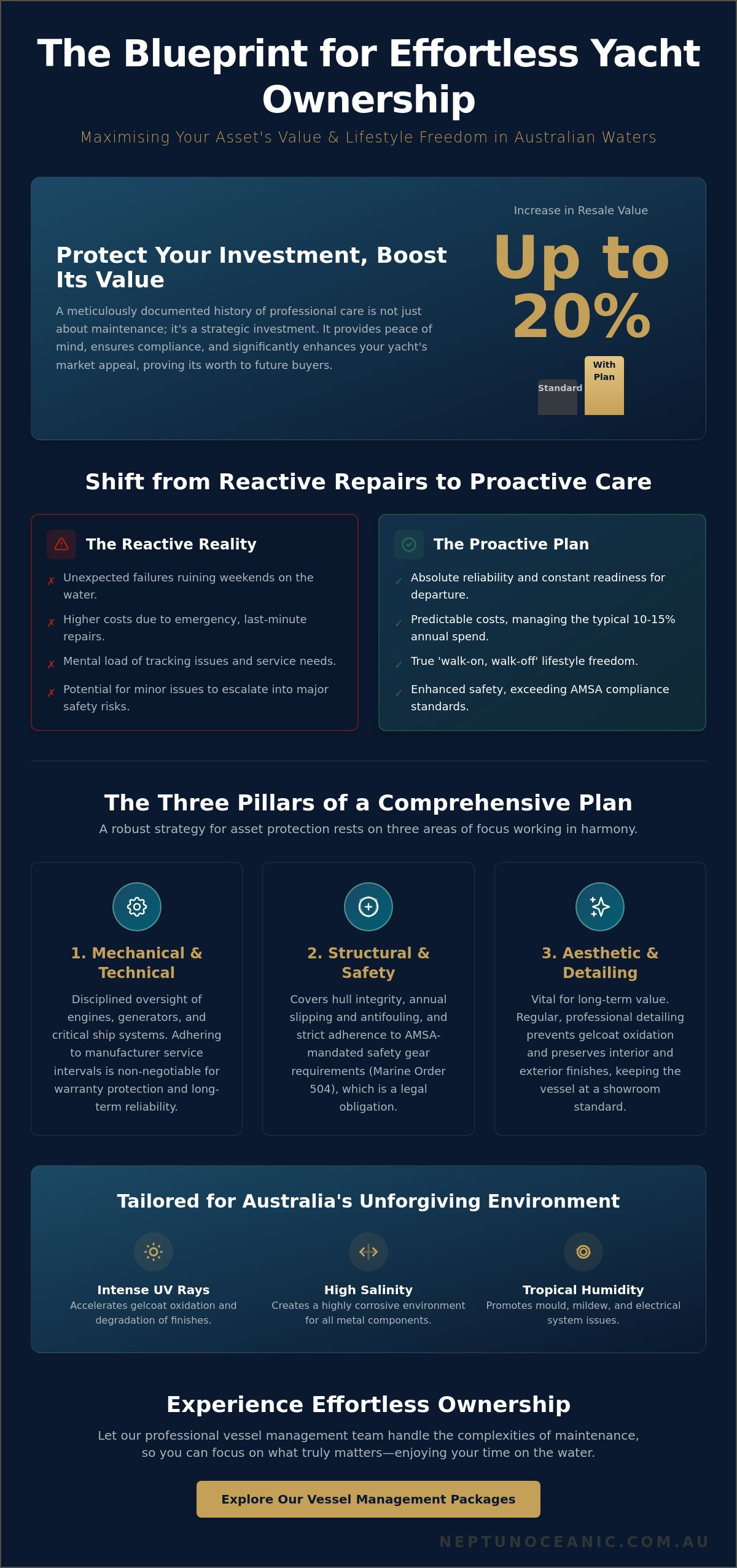
Did you know that a meticulously documented history of care can increase your yacht’s resale value by as much as 20 per cent? For many owners, the reality of vessel ownership often involves the mental load of tracking service intervals or the frustration of an unexpected mechanical failure ruining a clear Saturday morning on the water. It is easy to view upkeep as a series of reactive chores, but the most discerning owners understand that a structured vessel maintenance plan is actually a strategic blueprint for lifestyle freedom.
We believe that your time is your most precious commodity and you deserve a boat that is always pristine and ready for departure. You are about to learn how to structure a professional maintenance framework that satisfies the latest AMSA National Compliance Plan requirements while effectively managing the 10 to 15 per cent annual operating costs typical of luxury assets. We will explore how to move away from stressful, reactive repairs toward a model of predictable costs and absolute reliability, ensuring your maritime experience remains as effortless as it is elegant.
Key Takeaways
- Understand how a tailored vessel maintenance plan protects your asset from Australia's unique environmental challenges, including intense UV and high humidity.
- Discover why adhering to manufacturer service intervals is critical for maintaining mechanical warranties and meeting AMSA safety standards.
- Learn to treat detailing as a vital maintenance task that prevents gelcoat oxidation and preserves your yacht's aesthetic appeal and market value.
- Master the logistics of annual slipping and antifouling to ensure your hull remains efficient and your vessel is always ready for the water.
- Explore how professional vessel management packages remove the administrative burden of upkeep, allowing for a true walk-on walk-off lifestyle.
The Architecture of a Professional Vessel Maintenance Plan
Think of a vessel maintenance plan as more than a simple checklist; it's a strategic living document designed to preserve both your safety and your capital. While many owners treat maintenance as a reactive response to a broken component, the most successful Australian mariners view it as a continuous cycle of care. Our local environment is notoriously unforgiving. The combination of intense Southern Hemisphere UV rays, high salinity, and tropical humidity creates a corrosive cocktail that can rapidly degrade even the finest luxury yachts if left unchecked.
A tailored approach is essential. A plan that works in the Mediterranean will often fail across Australia's diverse coastal regions due to our unique climate. By documenting every service, filter change, and hull polish, you transform a complex machine into a transparent asset. This rigorous attention to detail establishes a "full service history" that becomes a powerful tool during future surveys. It's about building trust with future buyers long before they step on board by providing a clear, chronological narrative of the vessel's life and the care it has received.
Why Proactive Planning Beats Reactive Repair
The "cost of neglect" in the Australian maritime market is rarely just financial. It's measured in lost opportunities. There is nothing quite as frustrating as a mechanical failure during a peak boating weekend when the weather is perfect and your guests are ready to depart. Following established preventive maintenance principles ensures that components are replaced according to their duty cycle rather than their failure point. This proactive stance keeps your vessel in a state of constant readiness. It also ensures safety at sea, where a minor engine glitch can quickly escalate into a genuine emergency under the pressure of coastal swells. Investing in care today prevents the astronomical costs of emergency repairs tomorrow.
The Three Pillars of a Comprehensive Plan
A robust strategy for asset protection rests on three distinct areas of focus that must work in harmony:
- Mechanical and Technical: This involves the disciplined oversight of engines, generators, and critical ship systems. Adhering to manufacturer intervals is non-negotiable for warranty protection and long-term reliability.
- Structural and Safety: This pillar covers hull integrity, annual antifouling, and strict adherence to AMSA-mandated safety gear requirements. Under Marine Order 504, maintaining a safe vessel is a legal requirement, not just a suggestion.
- Aesthetic and Detailing: Often overlooked, this is the preservation of the interior and exterior finishes. Regular detailing prevents gelcoat oxidation and keeps the vessel's presentation at a showroom standard.
By balancing these pillars, a vessel maintenance plan ensures your time on the water is defined by relaxation rather than a list of pending repairs. It shifts the burden of management from the owner to a structured system, providing the peace of mind that every system is functioning exactly as it should.
This commitment to systematic care is a hallmark of world-class maritime operations; for instance, Bella Boating maintains their luxury fleet to these exacting standards to ensure a premium, worry-free experience for their guests.
Mechanical Integrity and Safety: Beyond AMSA Compliance
True luxury on the water is found in the silence of a perfectly tuned engine and the absolute confidence that every system will perform on command. While the Australian Maritime Safety Authority (AMSA) provides the regulatory baseline, a sophisticated vessel maintenance plan aims much higher than mere legal minimums. In our local waters, where summer temperatures regularly soar and salinity levels are high, mechanical systems face thermal stress and accelerated corrosion that European or American schedules often fail to anticipate. Integrity starts in the engine room, but it extends to every electrical circuit and safety sensor on board.
Protecting your investment requires a disciplined adherence to manufacturer service intervals. These aren't just suggestions; they are the primary gatekeepers of your vessel’s warranty and long-term reliability. We often see electrical systems, such as battery banks and shore power converters, neglected until a failure occurs at the most inconvenient moment. Integrating monthly health checks into your routine ensures that your electronics and house systems remain robust. For those who prefer to focus on the destination rather than the technicalities, our vessel management packages provide a seamless way to ensure these critical details are never overlooked.
Engine and Propulsion System Oversight
The heart of your yacht requires more than a simple oil change. A professional approach involves regular oil and coolant analysis to detect early signs of internal wear or contamination before they become catastrophic failures. In Australia’s warm coastal waters, rubber impellers can become brittle and fail prematurely, making scheduled replacements vital. Equally important is the concept of "exercising" the machinery. Engines and generators that sit idle for months are prone to seal drying and internal moisture buildup. A strategic vessel maintenance plan includes regular load-testing to keep moving parts lubricated and fuel systems clear of the microbial growth often found in marine diesel.
Compliance and Safety Equipment Audits
Safety is the ultimate luxury. Beyond the mechanical, your plan must account for the rigorous Australian standards governing life-saving equipment. This includes the regular servicing of life rafts, the replacement of expired flares, and the testing of EPIRBs and fire suppression systems. These requirements are often updated, and staying informed about professional vessel maintenance standards is essential for any responsible owner. Maintaining a centralised compliance calendar prevents the stress of lapsed registrations or insurance complications. By treating safety gear as a managed system rather than a "set and forget" inventory, you ensure that your vessel remains a sanctuary for your family and guests at all times.
Aesthetic Preservation: The Role of Detailing in Long-Term Value
While mechanical reliability ensures you reach your destination, it is the aesthetic condition of your yacht that defines the experience and preserves its capital value. Many owners mistakenly view detailing as a cosmetic luxury or a simple "wash and chamois" routine. In reality, professional detailing is a core functional requirement within a strategic vessel maintenance plan. In the harsh Australian climate, the sun's intensity acts as a constant abrasive, breaking down gelcoat and causing rapid oxidation that leaves hulls chalky and vulnerable. Without a proactive sealing schedule, your asset doesn't just lose its shine; it loses its structural integrity and market appeal.
Stainless steel components require similar vigilance to prevent the dreaded "tea-staining" so common in our coastal marinas. This unsightly brown discolouration is actually a form of surface corrosion that, if ignored, can lead to deep pitting and permanent damage. Inside the cabin, the challenge is equally significant. Salt air is a pervasive force that can degrade high-end timber finishes, cloud fine lacquers, and stiffen leather upholstery. A sophisticated maintenance programme treats the interior as a climate-controlled sanctuary, using specialised blockers and conditioners to keep every surface feeling as supple and refined as the day the vessel was launched.
Exterior Protection and Gelcoat Longevity
The first line of defence is a disciplined wash-down routine after every foray into salt water. Leaving salt crystals to dry on the surface creates thousands of tiny magnifying glasses that accelerate UV damage. For long-term preservation, we recommend moving beyond traditional carnauba waxes toward advanced ceramic coatings or high-grade polymer sealants. These create a hydrophobic barrier that sheds water and contaminants effortlessly. For those involved in yacht syndication, this level of presentation is vital. A pristine exterior ensures that every partner steps onto a vessel that feels brand new, fostering a culture of pride and shared respect for the asset.
Teak and Brightwork Maintenance
Teak decks are a hallmark of luxury, yet they are often the first victims of aggressive, uninformed cleaning. Using high-pressure washers or stiff brushes can strip away the soft grain of the timber, leading to a "ridged" surface that traps dirt and moisture. Correct maintenance involves gentle, pH-neutral cleaners and a soft-touch approach to preserve the wood's natural oils. Similarly, brightwork requires a methodical sanding and sealing calendar. In the Australian sun, varnish can become brittle and lift in as little as six months. Identifying early signs of timber stress, such as hairline cracks or silvering, allows for simple "refresh" coats that prevent the need for a full, costly strip-back to bare wood.
Structured Scheduling: Organising Your Vessel’s Annual Calendar
A successful vessel maintenance plan relies on a disciplined, chronological structure that spans the entire year. It is the invisible backbone of a seamless boating lifestyle, ensuring that every component is inspected before it has the chance to fail. By breaking down tasks into daily, monthly, and annual intervals, you transform the overwhelming "mental load" of ownership into a series of manageable, predictable events. This methodical approach is particularly vital in Australia, where seasonal shifts from the humid tropical north to the temperate south dictate different operational priorities for your yacht.
Coordinating these tasks requires a steady hand and clear communication with marine contractors. When you align your service schedule with the natural rhythm of the boating season, you avoid the frantic rush for shipyard space that typically occurs just before Christmas or Easter. If managing this calendar feels like a full-time commitment, our vessel management packages offer a sophisticated solution, where every detail is handled by professionals who understand the nuances of luxury asset care.
The Annual Haul-Out and Antifouling Process
The annual "slipping" is the most critical event in your yacht’s calendar. This haul-out period allows for a comprehensive inspection of everything below the waterline that remains hidden for the rest of the year. Antifouling is the primary defence against marine growth. Beyond merely keeping the hull clean, fresh antifoul is essential for maintaining fuel efficiency and protecting the hull's integrity from Osmosis or corrosion. While the boat is on the hard, it's the perfect time to replace sacrificial anodes and inspect through-hull fittings, rudders, and propeller shafts. These small components are the unsung heroes of your vessel's safety, and their failure can lead to catastrophic results if ignored during your vessel maintenance plan execution.
Monthly Systems Checks and Operational Runs
Yachts are designed to be used, and long periods of inactivity can be just as damaging as heavy weather. A monthly operational run is a non-negotiable requirement for any absentee owner. This involves more than just turning the keys; it's a methodical process of flushing raw-water cooling systems, testing every bilge pump, and cycling air conditioning units to prevent seals from drying out. These runs allow you to identify early warning signs of "seizing" in rarely used components, such as sea cocks or bow thrusters. For many of our clients, a professional "captain’s check" provides the ultimate peace of mind, ensuring that the vessel isn't just sitting in its berth, but is actively maintained in a state of constant readiness.
Preparing for seasonal shifts is the final piece of the scheduling puzzle. As winter approaches in southern states like Victoria or New South Wales, the focus shifts toward moisture control and battery preservation. Conversely, preparing for a Queensland summer requires a heavy emphasis on cooling systems and UV protection. By staying ahead of the weather, you ensure that your yacht remains a sanctuary of comfort, regardless of the temperature outside.
Effortless Ownership: How Neptune Oceanic Manages Your Maintenance
True luxury is found in the moments spent on the water, not in the hours spent at the dock managing logistics. Our "Walk-on Walk-off" service philosophy is built on the belief that your yacht should be a source of pure relaxation rather than a second full-time job. By transitioning the responsibility of your vessel maintenance plan to our team, you reclaim your weekends. We act as the steady hand behind the scenes, managing the intricate web of service intervals, contractor schedules, and regulatory filings that define modern yacht ownership. This comprehensive approach ensures that when you arrive at the marina, the only thing required of you is to turn the key and enjoy the horizon.
Professional management effectively removes the administrative burden that often weighs down private owners. Instead of chasing invoices or verifying the quality of a repair, you receive clear, transparent reporting that keeps you informed without the associated stress. For those involved in our yacht syndication models, this professional oversight is even more impactful. By sharing the costs of a high-tier maintenance programme among partners, we can implement a level of preventative care and detailing that preserves the asset in showroom condition while significantly reducing the individual financial commitment. It is a sophisticated way to enjoy the pinnacle of the boating lifestyle with absolute peace of mind.
The Professional Management Advantage
One of the most significant benefits of our management packages is access to a vetted network of premium Australian marine contractors. We have spent years refining these relationships, ensuring that every technician who steps on board your vessel meets our rigorous standards for quality and discretion. This network allows us to move beyond basic maritime safety requirements, implementing a standard of care that keeps your yacht "show-ready" at all times. Whether it is a mid-week systems check or a comprehensive pre-season detail, our team ensures every task is completed with meticulous attention to detail, honouring the high-end nature of your investment.
Your Next Steps to Hassle-Free Boating
If you find that the mental load of tracking service logs or the frustration of reactive repairs is detracting from your time on the water, it may be time to review your current arrangements. A professional audit of your existing vessel maintenance plan can reveal opportunities for better asset protection and more predictable annual costs. We invite you to experience the difference that a dedicated facilitator can make to your maritime lifestyle. Whether you own your vessel outright or are looking at the benefits of a syndicated share, our team is ready to provide the organised, authoritative guidance you need to protect your asset for the long term.
Enquire about our Bespoke Vessel Management Packages to discover how we can tailor a programme to your specific needs and ensure your time on the water remains entirely effortless.
Securing Your Maritime Legacy
Owning a luxury vessel should be an invitation to explore the Australian coastline, not a source of logistical frustration. By implementing a sophisticated vessel maintenance plan, you ensure that every mechanical system and aesthetic detail remains at a showroom standard. This disciplined approach does more than satisfy AMSA requirements; it protects your capital investment and guarantees that your time on the water is defined by relaxation rather than repairs.
We believe that the best maritime experiences are entirely frictionless. Our professional maritime oversight provides absolute peace of mind, while our walk-on walk-off service ensures we handle the logistics so you simply enjoy the water. It's the most effective way to preserve the value of Australia’s finest luxury vessels for years to come.
Experience Effortless Boating with Neptune Oceanic Management
Your next great adventure is waiting, and we're here to ensure your vessel is always ready to take you there.
Frequently Asked Questions
What are the essential components of an Australian vessel maintenance plan?
A professional vessel maintenance plan integrates mechanical service logs, structural integrity audits, and a rigorous aesthetic preservation schedule. It acts as a comprehensive roadmap that tracks everything from engine hours and battery health to the frequency of hull polishing. By centralising these details, you ensure that no critical component is overlooked, providing a clear record of care that supports both safety and future asset value.
How often should I slip my boat for antifouling and hull inspection?
Most vessels in Australian waters require slipping once every 12 to 18 months. This frequency depends on your specific location and the type of antifoul coating applied to the hull. Regular slipping is essential to prevent marine growth, which can reduce fuel efficiency and damage through-hull fittings. It also provides a rare opportunity to inspect sacrificial anodes and running gear that are otherwise hidden beneath the waterline.
Is a maintenance plan a legal requirement for private yachts in Australia?
While strictly mandatory for commercial vessels under Marine Order 504, a documented maintenance system is highly recommended for private yachts to ensure safety and insurance compliance. AMSA regulations focus on the vessel's condition, and having a plan proves you are meeting your general safety duties. Many insurance providers now look for documented service history when assessing claims, making a structured approach a practical necessity for every responsible owner.
What is the difference between detailing and regular boat cleaning?
Detailing is a restorative and protective process, whereas regular cleaning is merely a surface wash to remove salt and grime. A professional detail includes machine polishing to remove oxidation and the application of high-grade sealants or ceramic coatings. This deeper level of care is designed to preserve the gelcoat and stainless steel from the long-term corrosive effects of the Australian sun and salt air, rather than just providing a temporary shine.
How does a professional maintenance plan affect the resale value of my yacht?
A comprehensive vessel maintenance plan can increase a yacht's resale value by 10 to 20 per cent by providing a transparent "full service history." Prospective buyers and surveyors are far more confident in an asset that has a meticulous paper trail of preventative care. This documentation proves that the vessel has been managed with a high degree of professionalism, often leading to a faster sale and a significantly higher final price.
Can I manage my own maintenance plan, or do I need a professional manager?
You can certainly manage your own plan, but a professional manager removes the significant administrative burden and ensures nothing is missed. Managing a luxury yacht involves coordinating multiple contractors, tracking technical intervals, and staying updated on regulatory changes. A professional facilitator provides a single point of contact and a vetted network of specialists, transforming a complex logistical task into a seamless, walk-on walk-off experience for the owner.
What safety equipment must be included in my maintenance schedule under AMSA rules?
Your schedule must include the regular inspection and servicing of life rafts, EPIRBs, flares, and fire extinguishers. These items have specific expiry dates and service intervals that must be tracked to remain compliant with Australian safety standards. Including these in your broader maintenance calendar ensures that your safety gear is always operational and that you avoid potential fines or insurance complications during a maritime audit.
How do Australian weather conditions impact the frequency of maintenance tasks?
Our intense UV levels and high humidity mean that aesthetic and cooling system tasks must be performed more frequently than in milder climates. Gelcoat requires sealing at least twice a year to prevent chalking, and raw-water strainers often need more frequent checks due to local marine growth. Adapting your schedule to the local environment ensures that your vessel remains protected against the accelerated wear and tear typical of our beautiful but harsh coastal conditions.
Disclaimer
The content published on this blog reflects the views and experience of Neptune Oceanic and is provided for informational purposes only. While every effort is made to ensure accuracy, we make no representations or warranties regarding the completeness or suitability of any information for your individual circumstances. Nothing in this blog should be construed as financial, legal, or investment advice. All financial figures, cost estimates, and usage statistics are indicative only and may vary depending on vessel, location, and market conditions. Neptune Oceanic is a member of the Boating Industry of Australia (BIA).