
Antifouling Cost Australia 2026: A Premium Guide to Vessel Maintenance
In 2026, antifouling has evolved from a simple seasonal chore into a sophisticated asset-protection strategy where professional management provides a far higher return than a DIY approach. Understanding the nuances of antifouling cost australia 2026 is now essential for every discerning owner who values both their time and their vessel's integrity. We understand that rising labour rates and the logistical puzzle of organising annual haul-outs can feel like a distraction from the freedom of the open water. It's frustrating when the search for the right paint technology feels more like a gamble than a calculated investment.
This guide provides the clarity you need to manage your hull for peak performance while ensuring your vessel remains a source of relaxed indulgence rather than a maintenance burden. You'll gain a transparent look at the current pricing landscape across the East Coast and the impact of evolving biosecurity trends. We also explore how professional vessel maintenance packages can streamline these recurring requirements, allowing you to focus on the journey ahead while we handle the complexities behind the scenes.
Key Takeaways
- Gain a clear perspective on the market factors influencing the professional antifouling cost australia 2026 to ensure your vessel's protection is managed with precision.
- Identify the core drivers of service pricing, from vessel dimensions to hull condition, so you can accurately anticipate the requirements of your next haul-out.
- Understand the performance differences between ablative and hard coatings to choose a technology that perfectly matches your yacht’s speed and usage patterns.
- Account for the essential logistical costs, such as slipway fees and specialised running gear treatments, that are vital for maintaining peak fuel efficiency.
- Discover how vessel management packages and yacht syndication can remove the logistical headache of maintenance, providing you with a seamless maritime experience.
Understanding Antifouling Costs in the 2026 Australian Maritime Landscape
Owning a luxury vessel in Australia offers a unique sense of freedom, yet that experience relies heavily on the invisible health of your hull. The maritime market in 2026 has seen a notable shift in how maintenance is valued. A professional antifouling cost australia 2026 reflects more than just the application of protective coatings; it accounts for a global rise in high-grade raw material prices and the increasing premium on specialised maritime labour. Investing in a professional finish isn't merely about aesthetics. It's a calculated move to ensure your vessel operates with the smoothness and precision it was designed for.
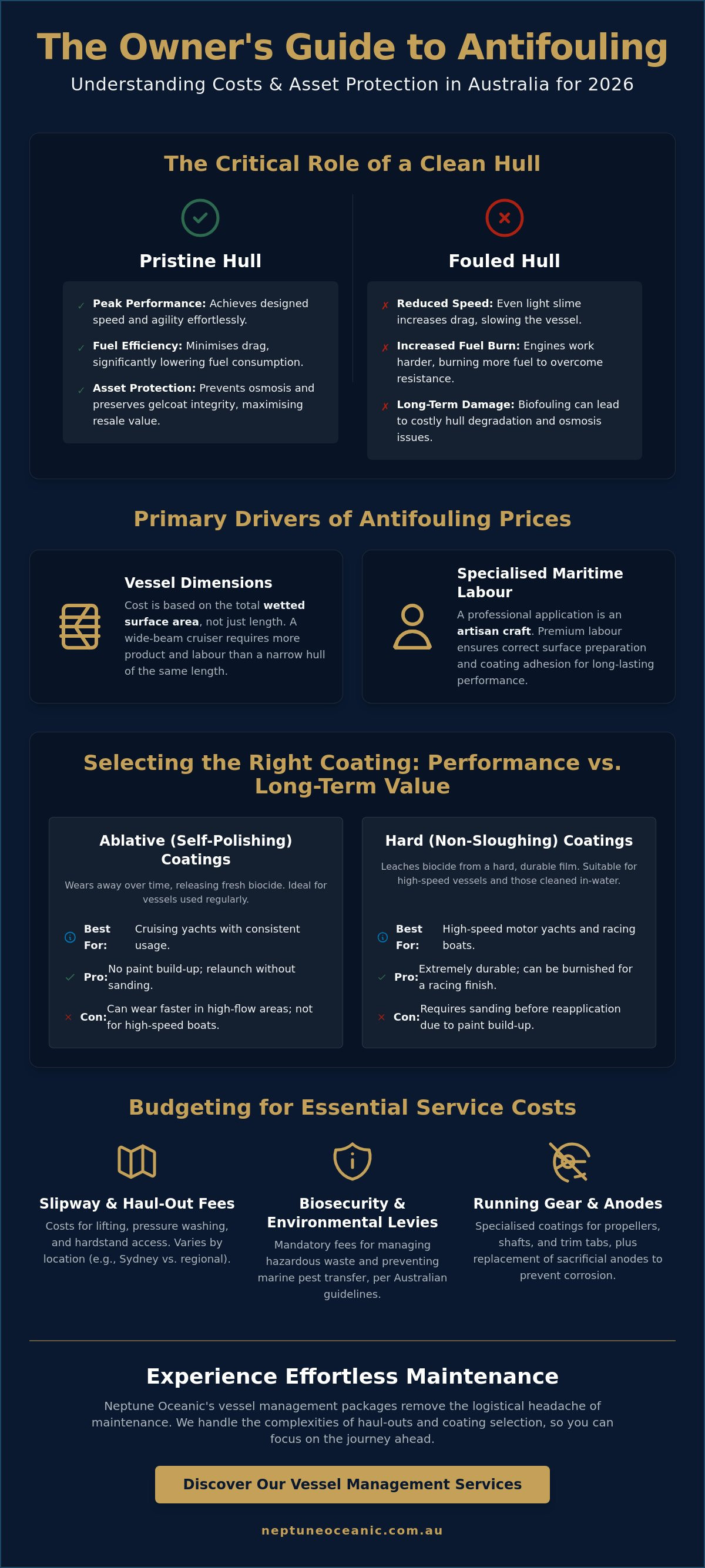
There is a direct, measurable correlation between a clean hull and the performance of a high-end motor yacht. Even a light layer of slime can significantly increase fuel consumption and reduce top-end speed. By maintaining a smooth profile, you ensure the engines don't have to work harder than necessary, which preserves the longevity of your mechanical systems. Beyond immediate performance, consistent antifouling prevents the long-term degradation of the gelcoat and protects against the onset of osmosis, which can be a devastatingly expensive issue to rectify if left unchecked.
The Role of Biofouling in Australian Waters
Australian coastal conditions are notoriously aggressive. Our warm, nutrient-rich waters create an ideal environment for rapid marine growth. To understand the necessity of protection, it's helpful to look at what antifouling paint is and how it creates a chemical or physical barrier against unwanted hitchhikers. Biofouling is the biological accumulation on submerged surfaces that compromises maritime efficiency. For high-performance yachts, this accumulation creates "drag," forcing the hull to push through the water with more resistance. This resistance doesn't just slow you down; it disrupts the refined, effortless flow that defines a premium cruising experience.
Antifouling as Asset Protection
Viewing hull maintenance through the lens of asset protection is vital for any discerning owner. A documented history of professional hull care is a powerful tool when it comes to preserving resale value. Potential buyers look for a steady, reliable hand in the vessel's history, and a pristine hull is the clearest indicator of a well-managed asset. Professional oversight ensures that the specific coating used is perfectly matched to your mooring environment, whether you're berthed in a high-flow marina or a quiet, brackish reach. For those who want the benefits of a perfectly maintained vessel without the logistical burden, yacht syndication shares offer an elegant solution. This model allows the antifouling cost australia 2026 to be shared among partners while professional managers handle the complexities of haul-outs and coating selection behind the scenes.
The Primary Drivers of Antifouling Prices Across Australia
Calculating the total antifouling cost australia 2026 involves more than a simple per-foot calculation. While length overall is a common starting point, shipwrights focus on the total wetted surface area. A wide-beam motor cruiser requires significantly more product and preparation time than a narrow-hulled vessel of the same length. This baseline measurement dictates the volume of premium coatings required to achieve a resilient finish that protects your investment.
In 2026, the maritime industry has seen a distinct shift toward highly skilled maritime technicians. This isn't just about rolling on a fresh coat of paint. It's an artisan craft that requires a deep understanding of chemical bonding and surface preparation. Quality labour is a premium, but it's the only way to ensure the coating performs as promised. Choosing an expert team means your vessel receives the attention to detail required for a smooth, high-performance finish.
Slipway fees now include sophisticated environmental and biosecurity levies. Facilities must manage runoff and hazardous waste disposal to meet the current 2015 Australian Anti-fouling and In-Water Cleaning Guidelines. These regulatory costs are fixed but vary between states, with Sydney and Melbourne facilities often reflecting the higher overheads of urban maritime centres. Understanding these local nuances is part of the professional oversight we provide to ensure a frictionless experience for our clients.
Measurement and Material Requirements
Precise volume calculations are essential for a professional finish. Shipwrights use specific formulas to determine the square meterage, ensuring enough product is ordered for multiple coats. Premium products like Jotun Seavictor 40 or International Micron One are the standard for luxury vessels. A 10-litre can of these high-performance coatings can range from $525 to over $573, excluding GST. While the initial investment is higher, these products offer the durability required for extended protection cycles, ultimately providing better value over time.
Preparation and Remedial Work
Preparation is the most labour-intensive phase of any haul-out. High-pressure water blasting removes the initial layer of slime, but manual scraping is often necessary for stubborn barnacles. For older yachts, "hull stripping" can become a significant cost variable if previous layers have begun to flake. This remedial work is essential to create a clean surface for the new paint. Following a strategic vessel maintenance plan is the most effective way to prevent these costs from escalating. If you're looking for a more effortless way to manage these requirements, our vessel management packages provide a seamless, professional solution that prioritises your peace of mind.
Selecting the Right Coating: Performance vs. Long-term Value
Choosing the right protective coating is where the initial antifouling cost australia 2026 meets long-term operational reality. It's a strategic decision that balances the immediate outlay with the desired interval between haul-outs. For many owners, the choice traditionally sits between ablative and hard coatings. Ablative, or self-polishing, paints are designed to wear away slowly as the vessel moves, constantly revealing a fresh layer of biocide. This technology is particularly effective for luxury cruisers that see moderate, regular use, as the movement of the hull through the water keeps the surface clean and efficient.
High-speed motor yachts often require a hard antifouling finish. These coatings create a durable, non-wearing surface that can withstand the friction of high velocities and regular scrubbing by divers. While these traditional options remain popular, the 2026 market has seen a sophisticated shift toward more sustainable, high-performance alternatives. Discerning owners are increasingly looking beyond the standard biocidal paints in favour of solutions that offer both environmental benefits and superior hull speed. Investing in premium products like Jotun Seavictor 40 or International Micron One, which can cost between $525 and $573 for a 10-litre can, provides the resilience needed for Australia's challenging conditions.
The Rise of Performance Silicone Coatings
Non-biocidal foul-release coatings, particularly silicone-based systems, have become a hallmark of modern maritime luxury. Unlike traditional paints that kill marine growth, silicone creates an ultra-smooth, non-stick surface that makes it difficult for organisms to attach. Any growth that does occur is usually washed away once the vessel reaches cruising speed. This ultra-smooth profile provides significant fuel-saving benefits by reducing drag. These advanced systems are becoming the preferred choice for managed yacht syndication shares, where the focus is on maximising performance and extending the time between professional maintenance cycles.
Matching Paint to Your Boating Profile
Selecting the perfect product requires an expert understanding of your boating profile. Your vessel's activity level is the primary factor; a boat that sits idle in a high-fouling area like the Gold Coast or Sydney Harbour requires a different strategy than one that cruises the cooler waters of Tasmania. Local water temperature and salinity levels also dictate how aggressively biofouling will attempt to take hold. While a "cheap" annual application might seem attractive, investing in a premium, multi-year solution often yields a higher return. This approach ensures your vessel remains a source of relaxed indulgence, with the technical complexities managed by a steady, reliable hand.
Budgeting for the 'Hidden' Expenses of a Professional Hull Service
The sticker price of the paint is only one part of the story when calculating the total antifouling cost australia 2026. To maintain a luxury vessel at its peak, you must account for the essential technical requirements that ensure safety and mechanical integrity. Slipway and haul-out fees are the logistical foundation of any professional service. In 2026, these costs reflect the significant overheads of prime waterfront facilities, where the equipment and expertise required to safely lift a high-value yacht are a premium. You should also expect waste disposal and environmental compliance surcharges. These fees cover the responsible management of runoff and old paint flakes, ensuring your maintenance routine aligns with the latest Australian biosecurity standards.
Neglecting these secondary costs can lead to far greater expenses down the track. A well-prepared budget for 2026 doesn't just look at the hull; it considers every submerged component that contributes to the vessel's effortless movement. By addressing these "hidden" elements during a single haul-out, you avoid the need for emergency mid-season lifts, which can be both costly and disruptive to your cruising plans. This methodical approach to budgeting ensures that the focus remains on your peace of mind and the continued enjoyment of your time on the water.
Running Gear and Mechanical Protection
Standard antifoul paint is unsuitable for propellers and shafts. The high rotational speeds and cavitation these parts endure would strip away traditional coatings in a matter of hours. Instead, high-performance foul-release coatings like PropSpeed are the industry benchmark. These coatings create an ultra-slick surface that prevents marine growth from bonding, which is vital for maintaining engine RPM and fuel efficiency. Similarly, applying specialised coatings to underwater lights and sensors prevents the biological build-up that can obscure vision or interfere with sensitive sonar electronics. Sacrificial anodes are the primary defence against galvanic corrosion. Replacing these during every haul-out is a non-negotiable step to protect your bronze and stainless steel hardware from the silent, destructive threat of electrolysis.
The Logistics of the Haul-Out
Hardstand rental fees are typically calculated on a daily basis, meaning "days on the slip" can quickly impact your final invoice. A professional approach involves meticulous planning to ensure that shipwrights, painters, and mechanical technicians are perfectly synchronised. This level of coordination minimises the time your vessel spends out of the water, returning you to the sea with minimal delay. Preparing for a haul-out requires specific protocols, from securing loose items below deck to managing tank levels for a balanced lift. The value of professional vessel management packages lies in the ability to coordinate these complex logistics on your behalf. We act as your sophisticated facilitator, refining the process to perfection so you can focus on the destination while we manage the technical realities. For a truly frictionless experience, explore our vessel maintenance and detailing services to ensure every aspect of your yacht is handled with a commitment to excellence.
Effortless Maintenance: The Neptune Oceanic Approach to Vessel Care
The logistical burden of coordinating a haul-out often becomes a distraction from the freedom of the open sea. While the technical requirements of hull care are absolute, the stress of managing them doesn't have to be. Neptune Oceanic acts as a sophisticated facilitator, bridging the gap between your desired lifestyle and the operational realities of yacht ownership. By choosing a managed approach, the antifouling cost australia 2026 becomes a predictable, shared investment rather than a solitary logistical headache. We refine the process to perfection, ensuring your vessel is always season-ready and maintained to the highest maritime standards.
Our "Walk-On Walk-Off" philosophy is designed for the owner who values ease and relaxed indulgence. You shouldn't have to spend your weekends supervising slipway contractors or debating the merits of different paint technologies. Instead, you can rely on a steady, reliable hand to oversee every detail behind the scenes. This professional oversight ensures that every application is performed with precision, using premium materials that guarantee smoothness and longevity. We manage the complexity so that your only responsibility is to enjoy the journey.
Shared Costs, Superior Care
Fractional ownership through syndication offers a distinct mathematical advantage when addressing high-ticket maintenance items. By spreading the antifouling cost australia 2026 across partners, the individual financial impact is significantly reduced without compromising on the quality of care. This model allows for the use of the most advanced coatings and the most skilled technicians, costs that might feel prohibitive for a sole owner. It also provides a natural buffer against rising maritime labour rates, as the collective buying power of a managed fleet ensures priority service and consistent pricing at Australia's premier shipyards.
Professional Oversight and Operational Excellence
A dedicated vessel manager provides an essential layer of quality control during the haul-out process. They act as a high-end concierge, supervising contractors to ensure that every stage of the hull preparation and coating application meets our exacting standards. This rigorous oversight is a core component of a yacht preventative maintenance checklist, ensuring that no detail, from anode replacement to running gear treatment, is overlooked. Discover how our yacht syndication shares offer a seamless path to luxury boating, where the complexities of maintenance are transformed into a frictionless experience of pure enjoyment.
Securing Your Maritime Legacy for 2026 and Beyond
Maintaining a luxury vessel is a commitment to excellence that extends far beneath the waterline. As we've explored, a professional antifouling cost australia 2026 represents a vital investment in your yacht's structural integrity and cruising performance. By selecting the right coating technology and accounting for essential mechanical protections like sacrificial anodes, you ensure your time on the water remains synonymous with freedom and ease.
True luxury is found in the absence of administrative stress. We provide a steady, reliable hand through our comprehensive vessel maintenance and detailing services, ensuring every haul-out is managed with meticulous attention to detail. Whether you seek the efficiency of shared ownership or the peace of mind offered by professionally managed maritime oversight, our team is here to facilitate a seamless experience. Explore our professionally managed Yacht Syndication Shares to discover a world of bespoke on-water luxury experiences without the logistical burden. Your next adventure is waiting; let us ensure your vessel is ready for the voyage.
Frequently Asked Questions
How much does antifouling cost for a 40ft yacht in Australia in 2026?
The investment required for a 40ft yacht is influenced by the vessel's beam, hull configuration, and the specific shipyard's base rates. Professional quotes for the antifouling cost australia 2026 are often calculated on a per-foot basis, with catamarans or flybridge cruisers typically incurring a surcharge due to the increased surface area. For an accurate assessment, a shipwright will evaluate the current hull condition to account for any necessary remedial work or heavy growth removal.
How often does a boat need to be antifouled in Australian waters?
Most vessels in Australian waters require professional antifouling every 12 to 18 months to maintain an effective barrier against aggressive marine growth. Under the Biosecurity Act 2015, managing biofouling is a requirement for vessels to reduce the risk of introducing invasive aquatic species. Yachts moored in warmer northern climates or high-flow estuaries may benefit from a more frequent 12-month cycle to ensure peak hull efficiency and fuel economy.
Can I antifoul my own boat to save on costs?
While some owners attempt a DIY approach, professional application is recommended to ensure the long-term integrity of a luxury asset. Modern boatyards must adhere to strict environmental regulations regarding runoff and waste disposal, and the specialised equipment required for proper hull preparation is rarely accessible to individuals. A professional service ensures the coating is applied under optimal conditions, protecting your vessel's resale value and ensuring the paint performs as intended.
What is the difference between ablative and hard antifouling paint?
Ablative coatings are designed to wear away slowly over time, constantly exposing fresh biocide as the hull moves through the water. This self-polishing nature is ideal for vessels used regularly, as it prevents the build-up of old paint layers. Hard antifouling creates a durable, fixed surface that does not wear away, making it the preferred choice for high-speed motor yachts or boats that require periodic in-water scrubbing by divers to maintain a racing finish.
Does antifouling improve the speed of my boat?
Yes, a fresh antifoul application significantly improves speed by creating a smooth, low-friction surface that reduces hydrodynamic drag. By eliminating barnacles, tube worms, and slime, you allow the hull to move through the water with minimal resistance. This restoration of the hull's profile ensures your engines don't have to work harder than necessary, which also results in a noticeable improvement in fuel efficiency and overall handling.
What happens if I skip my annual antifouling service?
Neglecting a service leads to rapid biofouling accumulation, which increases drag and places significant strain on your engines and propulsion systems. Over time, the lack of a protective barrier can result in permanent damage to the gelcoat or the development of osmosis in the hull. Additionally, a heavily fouled hull can lead to restricted access in certain marinas and may attract scrutiny under regional biosecurity guidelines designed to protect local marine environments.
Are there eco-friendly antifouling options available in 2026?
The 2026 market offers several sophisticated eco-friendly alternatives, including biocide-free silicone coatings that create an ultra-slick surface to prevent organisms from bonding. All antifouling paints sold and used in Australia must be approved by the Australian Pesticides and Veterinary Medicines Authority (APVMA). While the professional antifouling cost australia 2026 for these advanced foul-release systems reflects their high-performance nature, they offer excellent longevity and are increasingly preferred for their reduced environmental impact.
Is PropSpeed included in a standard antifouling quote?
PropSpeed and other running gear treatments are typically quoted as an additional service because they require a different application process and specialised materials. These foul-release coatings are designed specifically for metal surfaces like propellers, shafts, and rudders where traditional paint cannot adhere. Including these treatments in your maintenance schedule is vital for protecting your running gear from corrosion and ensuring that your propulsion system operates at its maximum rated RPM.
Disclaimer
The content published on this blog reflects the views and experience of Neptune Oceanic and is provided for informational purposes only. While every effort is made to ensure accuracy, we make no representations or warranties regarding the completeness or suitability of any information for your individual circumstances. Nothing in this blog should be construed as financial, legal, or investment advice. All financial figures, cost estimates, and usage statistics are indicative only and may vary depending on vessel, location, and market conditions. Neptune Oceanic is a member of the Boating Industry of Australia (BIA).