
Vessel Management Pricing: The Ultimate Australian Guide to Luxury Yacht Costs
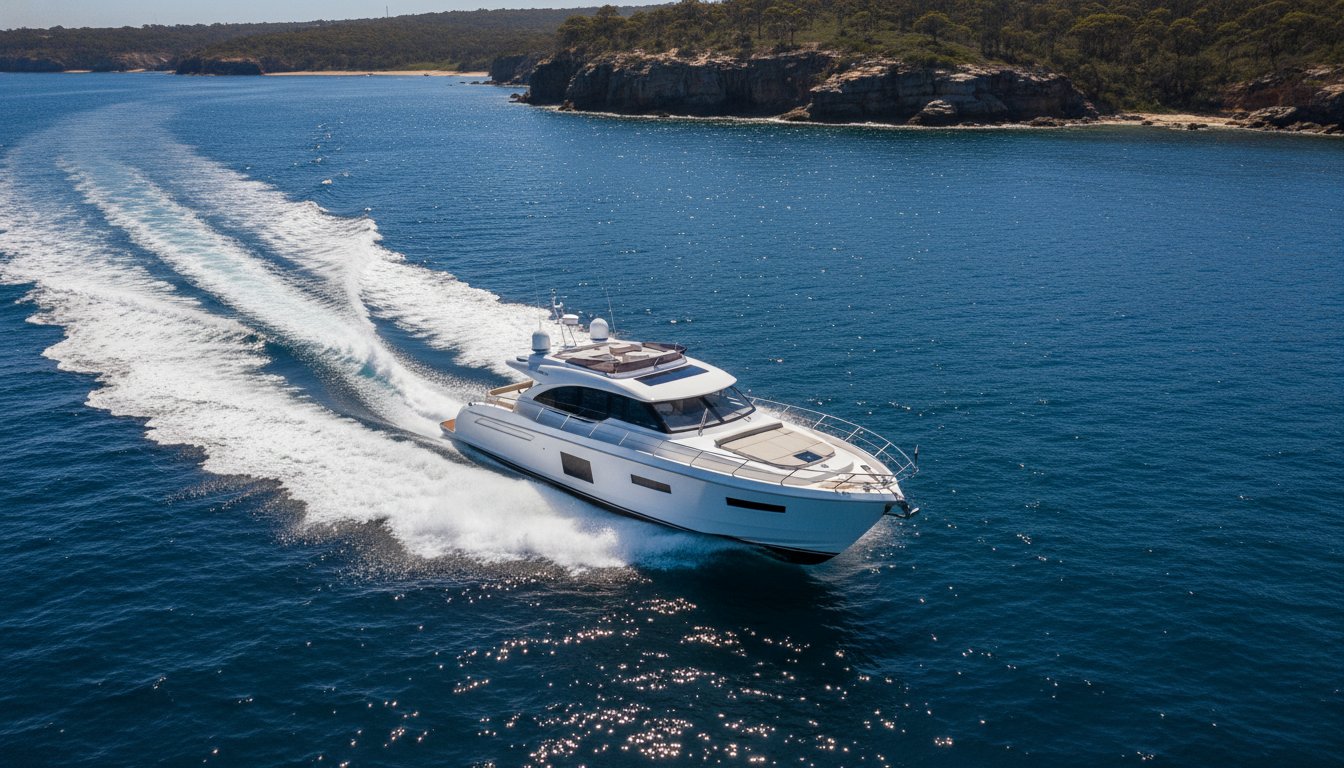
What if your yacht felt less like a logistical puzzle and more like the sanctuary you originally envisioned? For many Australian owners, the reality of maintaining a premium vessel involves a frustrating cycle of opaque billing and unexpected maintenance blowouts. Understanding the landscape of vessel management pricing is the first step toward reclaiming your weekends. It's about moving away from the headache of juggling multiple marine trades and toward a model that prioritises transparency and predictability.
You probably accept that a luxury asset requires a dedicated budget to stay in peak condition, yet the lack of clarity in how those funds are allocated can be exhausting. We agree that your leisure time shouldn't be spent micromanaging engine services or detailing schedules. This guide provides a comprehensive breakdown of management structures and operational costs tailored for the Australian market. We'll examine how professional maritime oversight protects your asset's value and ensures your boat is always in showroom condition, allowing you to focus on the freedom of the open sea.
Key Takeaways
- Learn to decode complex billing structures and identify the core components of a transparent maritime invoice.
- Discover how to balance fixed monthly retainers with variable operational expenses to achieve total clarity on your vessel management pricing.
- Compare the financial advantages of managed yacht syndication against the significant overheads of traditional private vessel oversight.
- Identify the essential AMSA safety levies and regulatory requirements needed to maintain your yacht's commercial-grade compliance.
- Understand how a hospitality-driven management approach delivers a true "walk-on walk-off" experience for total peace of mind.
Demystifying Vessel Management Pricing in the Australian Market
Owning a luxury yacht is a pursuit of pleasure, but the administrative weight behind the scenes can quickly tarnish the experience. When you look at vessel management pricing, it's helpful to view the invoice as a safeguard for your investment rather than a mere expense. A transparent management structure ensures that every dollar spent contributes to the vessel's longevity and your own peace of mind. It's the difference between a boat that's always ready for a sunset cruise and one that's perpetually waiting for a part to arrive.
Opting for "budget" management often results in a false economy. While a lower monthly retainer might look attractive initially, it frequently masks a lack of proactive maintenance. In the maritime world, neglect is cumulative. A small leak or a skipped service schedule can snowball into a catastrophic mechanical failure that costs ten times the original "saving". Professional oversight ensures that issues are caught while they're still minor adjustments, preventing the expensive blowouts that occur when systems are left to degrade.
There's a distinct difference between simple administrative oversight and comprehensive operational management. Administrative duties cover the essential paperwork, such as insurance renewals and basic compliance. Operational management is where the real value lies. It involves the physical coordination of trades, from shipwrights to marine electricians, ensuring that work is completed to a high standard and on schedule. It's about having a steady, reliable hand managing the complexity so you don't have to.
The Scope of Professional Oversight
Professional ship management acts as the bridge between your desired lifestyle and the technical realities of yacht ownership. Your manager serves as a single point of contact, handling the logistical heavy lifting of slipping, antifouling, and routine detailing. This centralisation eliminates the frustration of managing a dozen different contractors. Instead of chasing invoices and checking work quality yourself, you receive a single, organised report that reflects a vessel in peak condition.
Market Variations Across Australia
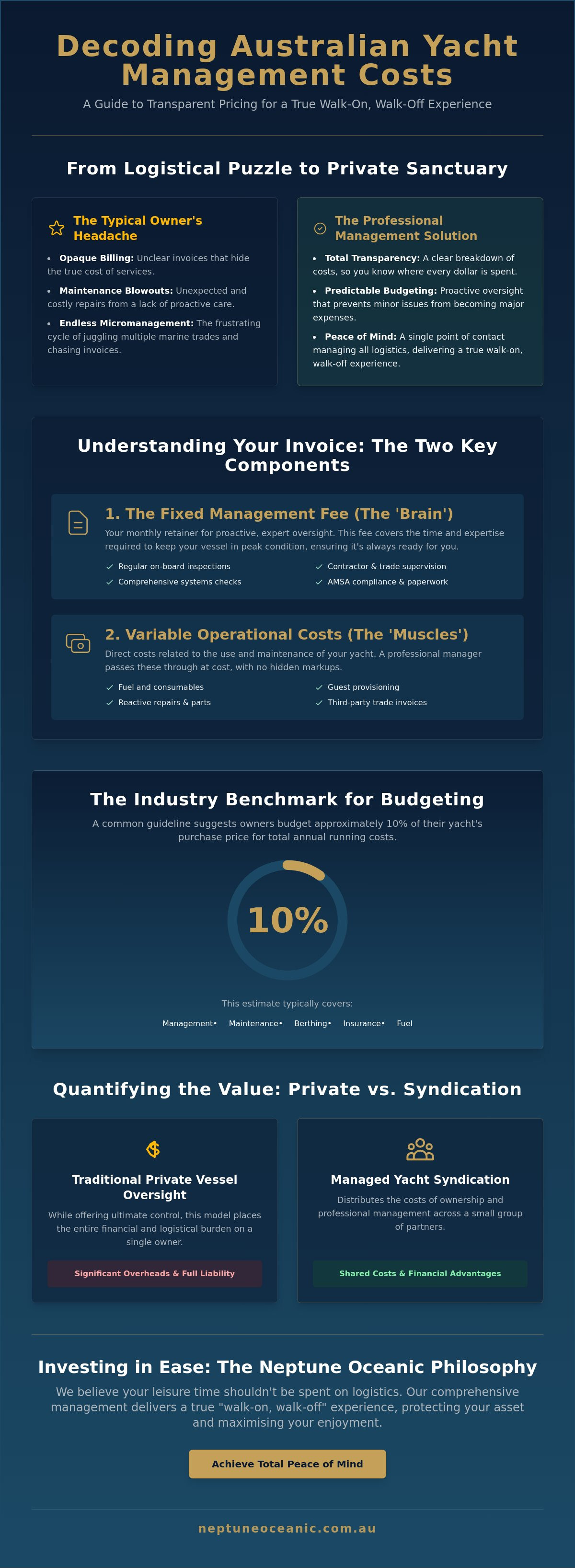
Across Australia, from the Whitsundays to Sydney Harbour, the baseline for vessel management pricing tends to remain relatively consistent even as berthing costs fluctuate. For instance, marina fees in Sydney typically range from $1,600 to $2,000 per month, yet the management effort required for a 20-metre motor yacht remains the same regardless of its port. Vessel type also plays a role. Motor yachts generally demand more intensive management than sailing vessels due to their complex mechanical systems and higher detailing requirements. A common industry benchmark is the "10% rule", which suggests owners should budget roughly 10% of the yacht's purchase price for annual running costs, covering everything from management to maintenance and berthing.
The Fixed Management Fee vs. Variable Operational Costs
Achieving a stress-free experience on the water relies on a clear understanding of how your budget is partitioned. Effective vessel management pricing typically involves two distinct streams: the fixed management fee and variable operational costs. This separation is designed to provide total transparency, ensuring you aren't paying a hidden markup on fuel or trade services. It's a system that treats your yacht as a high-value asset, requiring both professional administration and usage-based maintenance.
The fixed fee, often referred to as a retainer, acts as the brain of the operation. It covers the expert's time spent coordinating the complex web of maritime logistics. In contrast, variable costs are the muscles; they fluctuate based on how often you use the boat. Fuel, reactive repairs, and provisioning fall into this category. Premium management firms pride themselves on a "pass-through" billing model. This means third-party invoices from shipwrights or marine electricians are passed directly to the owner at cost, which is a hallmark of a truly professional facilitator.
What is Included in a Fixed Management Fee?
Your monthly retainer ensures a steady, reliable hand is always on the pulse of your vessel's health. This usually includes regular on-board inspections and comprehensive systems checks to catch minor issues before they escalate. A significant portion of this fee also covers the administrative burden of supervising external contractors and ensuring work meets elite standards. Part of this oversight includes managing mandatory AMSA fees and levies, which are essential for maintaining your vessel’s legal standing in Australian waters. You should also check what level of emergency support and weather monitoring your provider includes to ensure total peace of mind during storm seasons.
Managing the Variable Operational Budget
While management fees are predictable, variable costs require a more fluid approach. Savvy owners often establish a "sinking fund" to smooth out the financial impact of major works like engine overhauls or hull repaints. This proactive budgeting ensures that luxury detailing and high-end consumables are always available without causing a sudden spike in your monthly outgoings. For those seeking a more streamlined financial commitment, exploring yacht syndication shares can be an effective way to distribute these variable costs proportionally among a small group of owners. This model allows you to enjoy the full luxury of a managed vessel while significantly reducing the individual burden of fuel, cleaning, and reactive maintenance.
Quantifying the Value: Managed Syndication vs. Private Vessel Oversight
Boating should be about the destination, not the to-do list. When evaluating vessel management pricing, many owners overlook the "opportunity cost" of their own time. If you spend four hours cleaning, checking oil levels, and coordinating repairs for every one hour of actual cruising, the DIY model is costing you more than just money. Professional management flips this ratio. You arrive at the marina to find the engines warmed, the fridge stocked, and the decks gleaming. Your actual boating hours increase because the logistical friction has been removed by a seasoned facilitator.
Deciding how to oversee your yacht often comes down to a choice between hiring a private crew or engaging a professional management firm. While a full-time captain and deckhand offer dedicated service, the associated costs including salaries, insurance, and victualling are often prohibitive for vessels under 30 metres. Professional management offers a strategic alternative. It provides the same high-tier expertise and "ready-to-go" state at a significantly lower price point. This is because the administrative overheads are handled by a centralised team that understands the nuances of the Australian maritime environment.
The Syndication Advantage
For those looking to maximise their investment, the syndication model is a logical progression. By splitting fixed costs like berthing and insurance among several owners, the individual burden of vessel management pricing becomes remarkably efficient. You also benefit from the management firm's established relationships with local trades. These partnerships often translate to better priority for slipping and more competitive rates on parts. A managed fleet carries more weight with contractors than a single private owner. You can explore our current yacht share opportunities to see how this model balances luxury with fiscal sense.
Protecting the Asset’s Future Value
A yacht is a depreciating asset, but the rate of that depreciation is entirely within your control. A "fully managed" history is a powerful tool when it comes time to sell. It proves the vessel has been maintained to a professional standard rather than being subject to the "neglect spiral" common in unmanaged private boats. Buyers pay a premium for a vessel with a clean, documented maintenance log because it represents a known quantity. Following a Strategic Vessel Maintenance Plan ensures your yacht remains a sought-after asset in the second-hand market, protecting your capital for your next maritime adventure.
Navigating Regulatory Levies and Maintenance Variables
Compliance is the invisible foundation of a safe and legal yachting experience. In Australia, the regulatory environment is overseen by the Australian Maritime Safety Authority (AMSA), and their requirements significantly influence vessel management pricing. These costs aren't just administrative hurdles; they fund the essential navigation infrastructure and environmental protection measures that keep our coastlines pristine. A professional manager acts as your representative, ensuring every levy is paid and every certificate is current so you never face a compliance-related delay at the fuel dock.
Managing these obligations requires a methodical approach to paperwork and payments. Your management team handles the complex interaction with government bodies, ensuring your vessel remains in good standing. This includes managing environmental levies and pollution protection charges that are mandatory for vessels of a certain size. By centralising these tasks, the brand ensures your focus remains on the enjoyment of the water rather than the logistics of the law.
Understanding Australian Maritime Levies
Most owners are surprised by the specific levies required by the Commonwealth. The Marine Navigation Levy and the Regulatory Function Levy are standard for larger vessels, providing the lighthouses and safety systems we all rely on. For yachts operating within a syndication model, they are often classified as Domestic Commercial Vessels (DCV). This status brings a higher level of safety scrutiny, including mandatory inspections and specific safety equipment standards. Your management team coordinates these inspections, ensuring the vessel meets AMSA's rigorous criteria without you needing to decode hundreds of pages of maritime regulations.
The Maintenance Pricing Variable
Physical maintenance is the other side of the compliance coin. Regular antifouling and hull cleaning are essential to maintain performance and fuel efficiency. Neglecting these leads to "fouling", which increases drag and forces the engines to work harder, eventually leading to mechanical stress. There is a massive cost difference between preventative care and reactive repairs. By following a structured schedule, you avoid the sudden, high-cost failures that occur when systems are pushed too far. You can Download the Ultimate Yacht Preventative Maintenance Checklist to see the level of detail required to preserve a luxury asset.
Ready to experience the freedom of the water without the regulatory headache? Explore our comprehensive vessel management packages and let us handle the complexity for you.
Investing in Ease: The Neptune Oceanic Management Philosophy
At Neptune Oceanic, we believe that true luxury is found in the absence of effort. While the technicalities of vessel management pricing often focus on the mechanical, our philosophy prioritises hospitality. We act as stewards of your leisure time. Our role is to ensure that the transition from your car to the cockpit is entirely frictionless. It's a premium service designed for those who value their time as much as their vessel. We've refined our process to act as a high-end concierge, managing the complex logistics behind the scenes so you don't have to.
The "Walk-On Walk-Off" experience is the gold standard of our operation. It means that when you arrive, the vessel is in showroom condition. The systems are tested, the decks are spotless, and the interior is inviting. When you return to the marina, you simply hand over the keys. We take care of the wash-down, the engine flushes, and the laundry. This level of care transforms boat ownership from a part-time job into a genuine indulgence. We understand that trust is built through clarity. Our vessel management pricing models are structured to eliminate the maintenance blowouts that plague many owners. By providing detailed reporting and predictable monthly outgoings, we allow you to enjoy your asset without the nagging worry of hidden costs.
Professional detailing is the final touch of luxury that defines our managed fleet. It's more than a simple wash; it's a comprehensive programme to protect the gelcoat from the intense Australian sun and ensure the teak stays in prime condition. This proactive care maintains the aesthetic integrity of your yacht, ensuring it remains an object of pride and retains its value over the long term.
A Concierge Approach to Boating
Beyond the mechanical oversight, we offer a concierge level of service that anticipates your needs. This includes meticulous provisioning, ensuring your favourite vintage is chilled and the pantry is stocked with local produce before you arrive. We manage the interior preparation with the same precision we apply to the engine room. Every surface is polished, and every cabin is prepared to a five-star standard. A guest-ready vessel is our baseline, not an optional extra. We even handle post-trip laundry and cleaning, so the memory of your trip isn't overshadowed by the chores that follow it.
Taking the Next Step
Transitioning to a professionally managed model is a straightforward process that begins with understanding your specific needs. We provide transparent proposals that align with your boating goals, whether you're looking for comprehensive care for a private vessel or interested in the shared benefits of a syndicate. Our team is here to facilitate a lifestyle defined by freedom and ease. To discover how we can elevate your time on the water, enquire about our premium vessel management packages and let us handle the details while you enjoy the journey.
Reclaiming Your Time on the Water
Choosing clarity over complexity is the first step toward a better boating experience. Navigating the nuances of vessel management pricing is ultimately about securing financial predictability while ensuring your vessel is always guest-ready. Whether you're considering a private management package or the shared efficiency of a professionally managed syndicate, the goal remains the same. You deserve a yachting lifestyle defined by the horizon, not the engine room. Professional oversight ensures your asset's value is protected through every season, allowing you to focus on the destination rather than the logistics.
As Australian-owned and operated maritime specialists, we pride ourselves on a unique blend of operational excellence and high-end hospitality. We understand that your vessel is a significant investment. Our role as facilitators is to ensure that investment is protected through meticulous detailing and proactive maintenance. It's time to stop managing your boat and start enjoying it. Experience Effortless Boating with Neptune Oceanic Management and rediscover the sense of freedom that only the open sea can provide. We look forward to seeing you at the marina.
Common Questions About Australian Yacht Management
What is the average monthly cost of vessel management in Australia?
Monthly costs are influenced by the vessel's length, complexity, and the specific level of service you require. For mid-sized luxury yachts, owners usually pay a fixed monthly retainer that covers the professional oversight of the vessel's systems and administrative needs. This fee ensures a dedicated expert is managing the logistics of your boat, though the total investment varies depending on whether you opt for basic technical care or a comprehensive concierge service.
Does vessel management pricing include berthing and insurance fees?
Standard management agreements typically treat berthing and insurance as pass-through costs rather than including them in the base retainer. While your manager handles the complex task of negotiating marina berths and coordinating insurance renewals, these external expenses are billed directly to the owner. This approach maintains total transparency in your vessel management pricing, ensuring you pay the exact market rate for these essential services without any additional markups.
How does a yacht share management fee differ from private management?
A yacht share management fee is generally much lower for the individual because the fixed costs of professional oversight are split among the syndicate members. In a private ownership model, a single owner is responsible for the entire management retainer and all associated administrative overheads. Syndication allows owners to access a higher tier of hospitality and operational excellence that might otherwise be cost-prohibitive for a solo owner of a similar vessel.
Are there hidden costs in professional boat management agreements?
Premium management firms avoid hidden costs by providing a clear distinction between the management fee and variable operational expenses. You should expect to see pass-through billing for third-party trades, fuel, and consumables. Most "unexpected" costs in yachting actually stem from reactive repairs due to poor maintenance history, which is why a transparent agreement prioritises a proactive schedule to keep your budget predictable and your vessel reliable.
Can professional management actually save me money on maintenance?
Professional oversight often leads to significant long-term savings by identifying minor technical issues before they escalate into major mechanical failures. Managers also use their established networks of marine contractors to ensure work is completed to a high standard the first time, avoiding the cost of rework. By maintaining a meticulous service history, you also protect the vessel's resale value and avoid the steep depreciation that affects unmanaged boats in the Australian market.
How often do management fees typically increase?
Management fees are usually reviewed on an annual basis to stay in line with the consumer price index and the increasing maintenance requirements of an ageing vessel. If the scope of your service requirements changes, such as moving from basic oversight to a full-concierge model, the fee may be adjusted accordingly. These reviews are typically conducted with plenty of notice to ensure you have total clarity on your upcoming outgoings.
What is the difference between a management fee and a service fee?
A management fee covers the professional's time for administration, logistics, and the coordination of trades. A service fee refers to the physical labour and parts required for specific tasks, such as engine servicing, antifouling, or detailing. Keeping these two categories separate is a hallmark of professional vessel management pricing, as it allows you to see exactly what you are paying for oversight versus the physical upkeep of the yacht.
Is AMSA compliance included in standard management packages?
The administrative burden of tracking AMSA expiry dates and coordinating safety inspections is typically included in a management package, but the actual government levies and safety equipment are separate costs. Your manager ensures that your flares, liferafts, and fire systems are always within their service dates and that all regulatory paperwork is filed correctly. This oversight is vital for maintaining the legal standing and safety of your vessel in Australian waters.
Disclaimer
The content published on this blog reflects the views and experience of Neptune Oceanic and is provided for informational purposes only. While every effort is made to ensure accuracy, we make no representations or warranties regarding the completeness or suitability of any information for your individual circumstances. Nothing in this blog should be construed as financial, legal, or investment advice. All financial figures, cost estimates, and usage statistics are indicative only and may vary depending on vessel, location, and market conditions. Neptune Oceanic is a member of the Boating Industry of Australia (BIA).