
The Definitive Annual Yacht Maintenance Checklist for Australian Owners
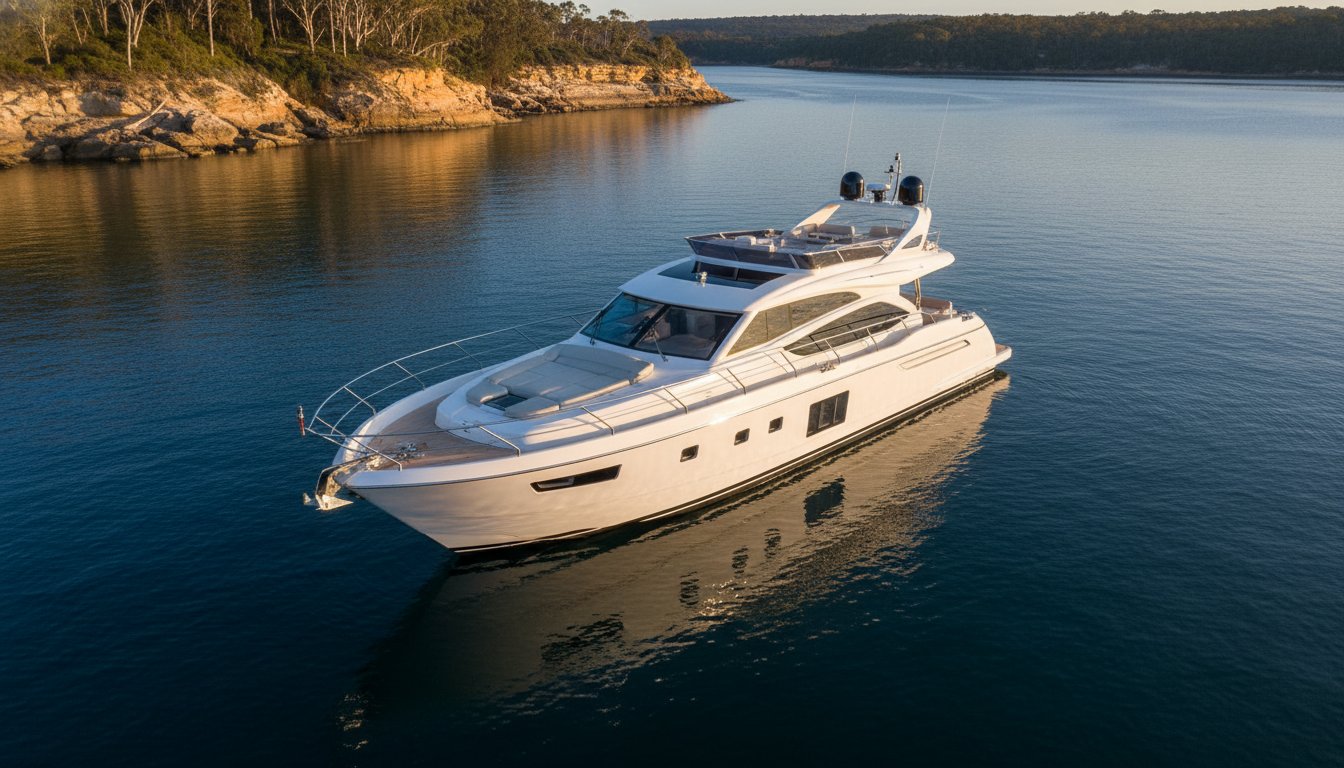
Your yacht is far more than a vessel; it is a high-performance sanctuary that requires more than just a cursory wash-down to withstand the unforgiving Australian elements. Relying on reactive repairs is an expensive strategy that often leads to missed weekends and diminished asset value. To truly protect your investment, you need a proactive annual yacht maintenance checklist that balances mechanical precision with the latest maritime safety standards.
We understand that managing multiple contractors and staying abreast of shifting regulations can feel like a full-time job. With new safety requirements for lifting appliances having commenced on 1 May 2026, and further updates to life-saving equipment arriving in June, the logistical burden has never been higher. This guide provides a clear, professional roadmap to help you master these essential tasks. You will learn how to streamline your upkeep and satisfy AMSA requirements, ensuring a seamless walk-on, walk-off experience that preserves your vessel's showroom condition and market value.
Key Takeaways
- Understand why a structured maintenance cycle is a strategic investment that shields your vessel’s resale value from the abrasive effects of Australian salt and UV.
- Identify the critical engineering checkpoints, including fuel system integrity and generator servicing, required to ensure reliable performance in open waters.
- Utilise our definitive annual yacht maintenance checklist to maintain showroom standards across your teak decking and exterior finishes.
- Simplify your compliance with the latest Australian maritime safety standards by auditing life-saving equipment and updating essential navigation firmware.
- Compare the efficiency of managed vessel services against the complexity of solo upkeep to reclaim your time for pure leisure.
The Strategic Importance of an Annual Maintenance Cycle
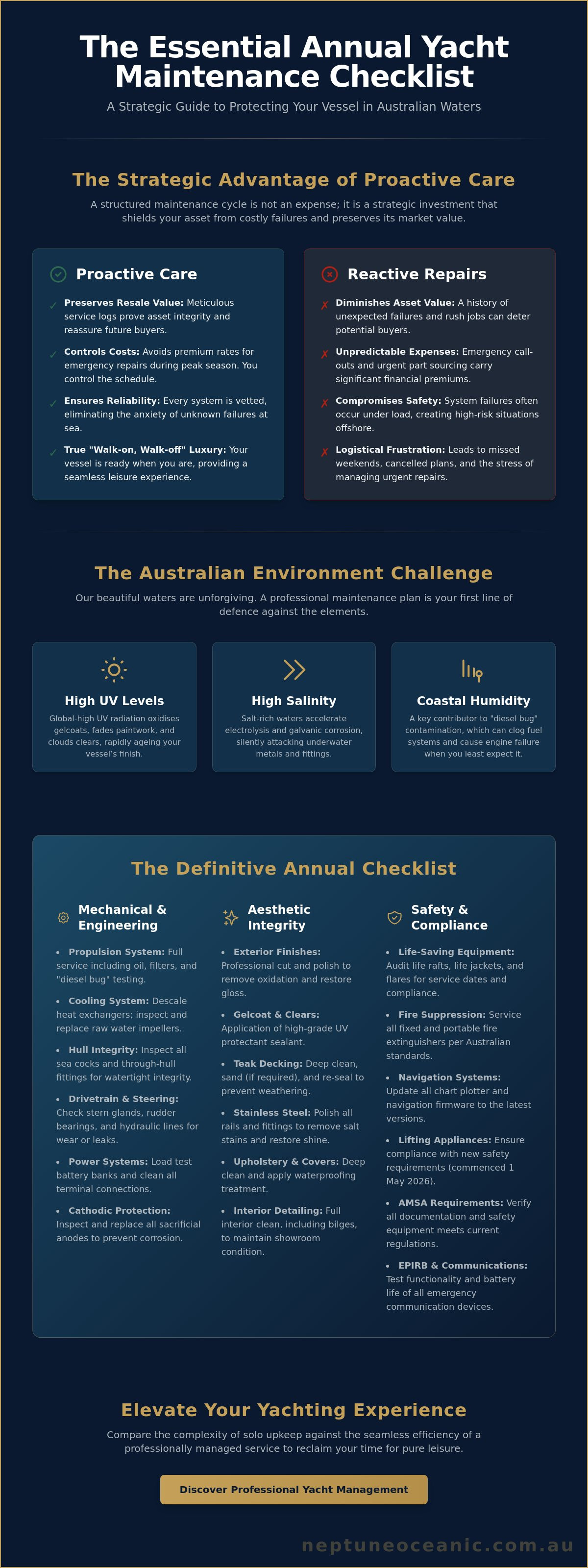
Ownership of a luxury vessel in Australia is a pursuit of freedom, but that freedom relies on the absolute mechanical and aesthetic integrity of the craft. A comprehensive annual yacht maintenance checklist is not merely a list of chores; it is a strategic asset protection strategy. By committing to a structured vessel maintenance plan, owners move beyond the stress of reactive repairs. Instead of waiting for a system to fail during a weekend cruise in the Whitsundays, you ensure every component is vetted and verified well before you cast off.
The financial logic is clear. Emergency repairs at sea or "rush" jobs at the boatyard during peak season carry a significant premium. Proactive care ensures that you control the schedule and the costs. This transition from a "fix-it" mindset to a professional management approach is what separates a high-performing vessel from one that becomes a liability. It's about ensuring the boat is ready when you are, providing that seamless "walk-on, walk-off" experience that defines true luxury. When you treat maintenance as a non-negotiable cycle, you eliminate the anxiety of the unknown.
Preserving Your Investment Value
A yacht is a significant capital investment. Its market value is directly tied to its service history. Detailed maintenance logs provide a transparent record that reassures future buyers and maintains the validity of manufacturer warranties. Professional oversight ensures that these records are meticulous and ready for inspection at any time. Achieving "showroom condition" is an ongoing process. It requires a 12-month strategic calendar that addresses wear and tear before it becomes visible degradation. This methodical approach ensures that your vessel remains a prestigious asset rather than a source of logistical frustration.
The Australian Environment Challenge
Australian waters are notoriously beautiful but incredibly harsh. Our coastal regions experience some of the highest UV levels globally, which can oxidise gelcoats and cloud clears in a single season. Understanding boat maintenance fundamentals is vital for managing the high salinity of our waters, which accelerates electrolysis and galvanic corrosion. We often recommend that major refits occur during the autumn months. This timing allows for thorough inspections after the summer heat has passed and ensures your vessel is pristine for the next season. By following a rigorous annual yacht maintenance checklist, you protect the very features that make your yacht a luxury asset while ensuring your time on the water remains an indulgence, not a chore.
Mechanical and Engineering: The Heart of the Vessel
The engine room is the mechanical soul of your yacht. While the exterior reflects your style, the engineering space dictates your safety and freedom on the water. A truly comprehensive annual yacht maintenance checklist begins here, where precision is the only standard. For diesel and petrol systems, yearly servicing must go beyond oil changes to include a rigorous audit of the entire propulsion chain. This includes testing for "diesel bug" contamination, a common byproduct of Australian humidity that can clog injectors and stall engines at the most inconvenient moments. Replacing all primary and secondary fuel filters is a baseline requirement for maintaining peak performance.
Cooling systems require equal attention, especially when operating in the warmer coastal waters of Queensland or Western Australia. Heat exchangers should be descaled to prevent overheating, while raw water impellers must be inspected or replaced to ensure consistent flow. To assist with these technical requirements, many owners refer to the annual 45-point checklist provided by maritime authorities as a foundational guide for mechanical readiness. Inspecting sea cocks and through-hull fittings annually is a non-negotiable safety requirement to ensure the watertight integrity of your hull. Finally, the drive train and steering systems, including stern glands, rudder bearings, and hydraulic lines, must be checked for wear or weeping to prevent vibration and ensure responsive handling.
Power and Propulsion Audit
Electrical reliability is paramount for modern luxury vessels. Your annual review should include load capacity testing for all battery banks and a thorough cleaning of terminal connections to prevent voltage drops. We also focus heavily on cathodic protection; replacing sacrificial anodes is essential to prevent galvanic corrosion over the coming twelve months. Propeller and shaft alignment should be verified to minimise vibration, which protects the transmission and enhances fuel efficiency. If managing these technicalities feels overwhelming, our vessel management packages provide a seamless way to ensure every engineering detail is handled by experts.
Auxiliary Systems and Hydraulics
The luxury experience relies on the silent operation of auxiliary systems. Desalinators, or water makers, require membrane cleaning and filter replacement to ensure a fresh supply of potable water. Similarly, air conditioning systems need their condensers flushed and ducting sanitised to maintain a crisp, odour-free cabin environment. For vessels equipped with hydraulic swim platforms or gangways, we test for pressure consistency and inspect all seals for potential leaks. These systems are complex, but their flawless operation is what transforms a boat into a high-end sanctuary.
Aesthetic Integrity: Exterior and Interior Standards
A pristine aesthetic is the most visible indicator of a vessel's health and the quality of its management. In the harsh Australian climate, maintaining this appearance requires a depth of care that goes far beyond a simple wash and wax. The relentless UV radiation and high salt content of our coastal waters can degrade even the finest finishes in a single season. Our professional vessel detailing services set a standard that prioritises long-term surface protection. This involves deep-cleaning gelcoats to remove oxidation and applying high-grade ceramic coatings or specialised waxes that act as a sacrificial barrier against the sun.
Teak decking remains a hallmark of luxury, yet it demands meticulous attention to prevent silvering or wood rot. An effective annual yacht maintenance checklist must include a multi-stage restoration process: cleaning with pH-neutral solutions, brightening to restore the wood's natural golden hue, and a critical assessment of the caulking integrity. Similarly, the stainless steel brightwork that defines a yacht's profile is susceptible to "tea staining" in high-salinity environments. We utilise advanced passivation techniques to chemically restore the protective oxide layer of the metal, ensuring a mirror-like finish that lasts. For the soft side of the exterior, all upholstery and clears require deep cleaning followed by the application of marine-grade UV protectants to prevent cracking and fading.
Hull and Deck Refinement
While the vessel is on the slipway, the hull requires a professional eye to assess the condition of antifouling coatings. This is also the ideal moment for gelcoat correction. We identify and repair hairline cracks or "spidering" before moisture can penetrate the laminate and cause structural issues. Don't overlook the anchor locker and windlass; the chain should be hauled out, cleaned, and the motor lubricated to ensure the entire system operates smoothly when you're ready to drop hook in a secluded bay.
Interior Luxury and Hospitality Systems
The interior of your yacht should be a refined sanctuary, free from the creeping effects of salt damp. We recommend professional steam cleaning for all carpets and headliners to remove salt crystals that attract moisture. Your hospitality systems also need a yearly audit. This includes descaling plumbing lines and servicing electric toilets to prevent blockages. Finally, ensure your galley is guest-ready by checking that refrigeration units and icemakers are operating at peak efficiency, keeping your refreshments perfectly chilled regardless of the outside temperature.
Safety, Navigation, and Australian Compliance
Safety is the silent partner of luxury. While previous sections focused on performance and aesthetics, this stage of your annual yacht maintenance checklist addresses the essential protocols that protect your guests and ensure compliance with Australian maritime laws. True freedom at sea requires the absolute certainty that every safety system will perform flawlessly under pressure. This begins with a comprehensive yacht preventative maintenance audit, specifically tailored to meet the evolving standards set by the Australian Maritime Safety Authority (AMSA). Staying current is vital; for instance, amendments to Marine Order 25 regarding life-saving equipment took effect on 1 June 2026, introducing updated requirements for on-board gear.
Compliance also extends to environmental and operational safety. As of 1 January 2026, the use of fire extinguishing media containing PFOS is prohibited in new vessels under updated SOLAS regulations. Beyond equipment, your annual review must include a rigorous inspection of the mast and rigging. Even for motor yachts, radar masts and antenna mounts are susceptible to vibration fatigue and salt-induced stress. Ensuring your Safety Management System (SMS) is updated to reflect these 2026 regulatory shifts is not just a legal necessity; it is a hallmark of professional vessel ownership. A steady, methodical approach to these details ensures that your time on the water remains focused on relaxation rather than risk.
Life-Saving Appliance (LSA) Audit
Your life raft and EPIRB are your final lines of defence. Verifying service dates and battery expiration is a non-negotiable yearly task. We recommend professional certification for all engine room fire suppression systems, ensuring they meet the latest non-PFOS standards. Inflatable PFDs also require a meticulous eye; visual inspections of the bladders and precise cylinder weight checks are essential to ensure they deploy correctly when needed. These small, disciplined checks provide the peace of mind that defines a premium boating experience.
Navigational and Electrical Reliability
Digital reliability is just as critical as mechanical health. Your annual yacht maintenance checklist should include updating all digital charts and ensuring that firmware for radar and AIS systems is current. We test every navigation light and emergency backup power system to ensure visibility in all conditions. Communication is equally vital; VHF and HF radios must be checked for clear transmission and full DSC functionality. Finally, we test the automatic switches and manual overrides for every bilge pump compartment, ensuring your vessel's primary defence against water ingress is ready for any challenge.
To ensure your vessel remains fully compliant with the latest Australian standards without the administrative burden, explore our Vessel Management Packages today.
The dream of yacht ownership is often anchored by the relentless reality of upkeep. While the technical requirements of an annual yacht maintenance checklist are clear, the execution is where many sole owners find themselves overwhelmed. Choosing between a DIY approach and professional management isn't just a financial decision; it's a choice about how you value your leisure time. Attempting to coordinate multiple contractors, from marine electricians to shipwrights, often leads to a fragmented service history and escalating costs.In contrast, managed yacht syndication offers a sophisticated alternative that prioritises your peace of mind. By leaning on a steady, reliable hand to manage the background complexity, you reclaim the freedom that boating is supposed to provide. This model ensures that the vessel is maintained to a professional standard year-round, moving far beyond the "good enough" results of amateur maintenance. It is the difference between arriving at the marina to find a list of tasks and stepping onto a vessel that is fuelled, provisioned, and pristine.
The Logistics of Luxury
Professional vessel managers operate much like a high-end concierge. They possess the industry leverage to secure the best specialists, ensuring that work is performed correctly the first time. Private owners often struggle to find reliable contractors during the busy spring refit season, but a managed programme provides a consistent schedule. This administrative oversight removes the paperwork and phone calls from your life. Having a professional manager sign off on every task ensures that the quality of work meets an exacting standard, preserving the vessel's long-term market value.
The Syndication Advantage
The financial logic of syndication is compelling. By sharing the costs of major items like insurance, berthing, and engine servicing, owners enjoy premium standards for a fraction of the individual investment. Syndicates also benefit from the power of bulk purchasing. Whether it is sourcing antifouling paint or organising annual engine labour, a managed fleet achieves efficiencies that a sole owner simply cannot match. This consistency of care ensures your yacht is always ready for your next booking, providing a true "walk-on, walk-off" experience. If you are ready to indulge in the lifestyle without the logistical burden, explore our current yacht share opportunities and leave the annual yacht maintenance checklist to our expert team.
Elevating Your Experience on Australian Waters
Mastering a comprehensive annual yacht maintenance checklist is the key to transforming your vessel from a complex logistical challenge into a source of pure, unadulterated freedom. We've explored how a proactive approach to engineering, aesthetic refinement, and Australian maritime compliance protects both your safety and your asset's market value. By moving away from reactive repairs, you ensure your time at sea is defined by relaxation rather than frustration.
The transition to a professionally managed vessel program allows you to bypass the administrative burden of coordinating contractors and tracking regulatory shifts. With our expert maritime oversight, you can enjoy a true walk-on walk-off luxury experience where every detail is handled with precision. Whether you are seeking a share in a new craft or wish to streamline your current upkeep, we're here to facilitate your ideal lifestyle. Discover Effortless Boating with Neptune Oceanic Yacht Shares and reclaim your weekends. The horizon is waiting; let us ensure you're ready to meet it.
Frequently Asked Questions
How often should I professionally antifoul my yacht in Australia?
Professional antifouling is typically required every 12 to 18 months to maintain hull efficiency and protect against marine growth. In warmer northern waters, such as Queensland, high water temperatures can accelerate fouling, potentially requiring more frequent attention. Regular hull scrubbing by a diver between slipway visits can extend the life of your coating and ensure peak performance.
Can I perform my own annual yacht maintenance to save costs?
While owners can manage basic tasks like surface cleaning, complex engineering and safety audits should be performed by qualified professionals. Amateur mistakes in technical areas can lead to expensive failures and may even void your insurance or manufacturer warranties. Utilising a professional annual yacht maintenance checklist ensures that every critical system is vetted to a high-tier standard, preserving your vessel's resale value.
What are the specific AMSA safety requirements for private luxury vessels?
AMSA mandates specific standards for life-saving appliances, including fire suppression systems and EPIRBs. As of May 2026, new safety requirements for lifting appliances and winches are in effect, requiring examinations by a competent person. It's essential to maintain an updated Safety Management System (SMS) that reflects these recent regulatory changes to remain compliant in Australian waters.
How much should I budget for annual maintenance on a 50-foot motor yacht?
Budgeting for a 50-foot vessel involves accounting for engineering, insurance, and berthing. While costs vary based on usage, a common industry benchmark is to allocate approximately 10% of the vessel's market value each year for comprehensive upkeep. This figure covers routine engine servicing, slipway fees, and the preventative care required to keep a luxury asset in showroom condition.
Is a professional rigging inspection necessary every year?
Yes, a professional rigging inspection is a non-negotiable yearly task for both sailing and motor yachts. For motor vessels, this focuses on the integrity of radar towers, antenna mounts, and stabilizers that endure constant vibration. For sailing vessels, annual checks identify frayed wires or cracked swages before they lead to a catastrophic failure, ensuring your standing rigging remains reliable.
What is the difference between a general clean and a professional vessel detailing service?
A general clean removes surface salt and grime, whereas professional detailing is a restorative process that protects the vessel's finish. Detailing involves gelcoat correction, stainless steel passivation to prevent tea staining, and the application of high-grade UV protectants. This service is designed to maintain the aesthetic integrity of the yacht, ensuring it looks as impressive as the day it was launched.
How does managed syndication handle unexpected repair costs during the year?
Managed syndication programmes utilise a structured sinking fund to cover both routine maintenance and anticipated repairs. When unexpected issues arise, the professional management team coordinates the repair through this shared pool, ensuring the vessel is restored to a professional standard without delay. This model provides owners with financial predictability and removes the stress of managing emergency repairs privately.
What are the most common maintenance items overlooked by Australian yacht owners?
Fuel system hygiene and sea cock functionality are the items most frequently missed on an annual yacht maintenance checklist. Australian humidity often encourages the growth of "diesel bug" in fuel tanks, which can lead to engine failure at critical moments. Additionally, many owners overlook the testing of automatic bilge pump switches in every compartment, which is a vital safety layer for any coastal passage.
Disclaimer
The content published on this blog reflects the views and experience of Neptune Oceanic and is provided for informational purposes only. While every effort is made to ensure accuracy, we make no representations or warranties regarding the completeness or suitability of any information for your individual circumstances. Nothing in this blog should be construed as financial, legal, or investment advice. All financial figures, cost estimates, and usage statistics are indicative only and may vary depending on vessel, location, and market conditions. Neptune Oceanic is a member of the Boating Industry of Australia (BIA).