
Luxury Yacht Syndication: How Shared Yacht Ownership Works
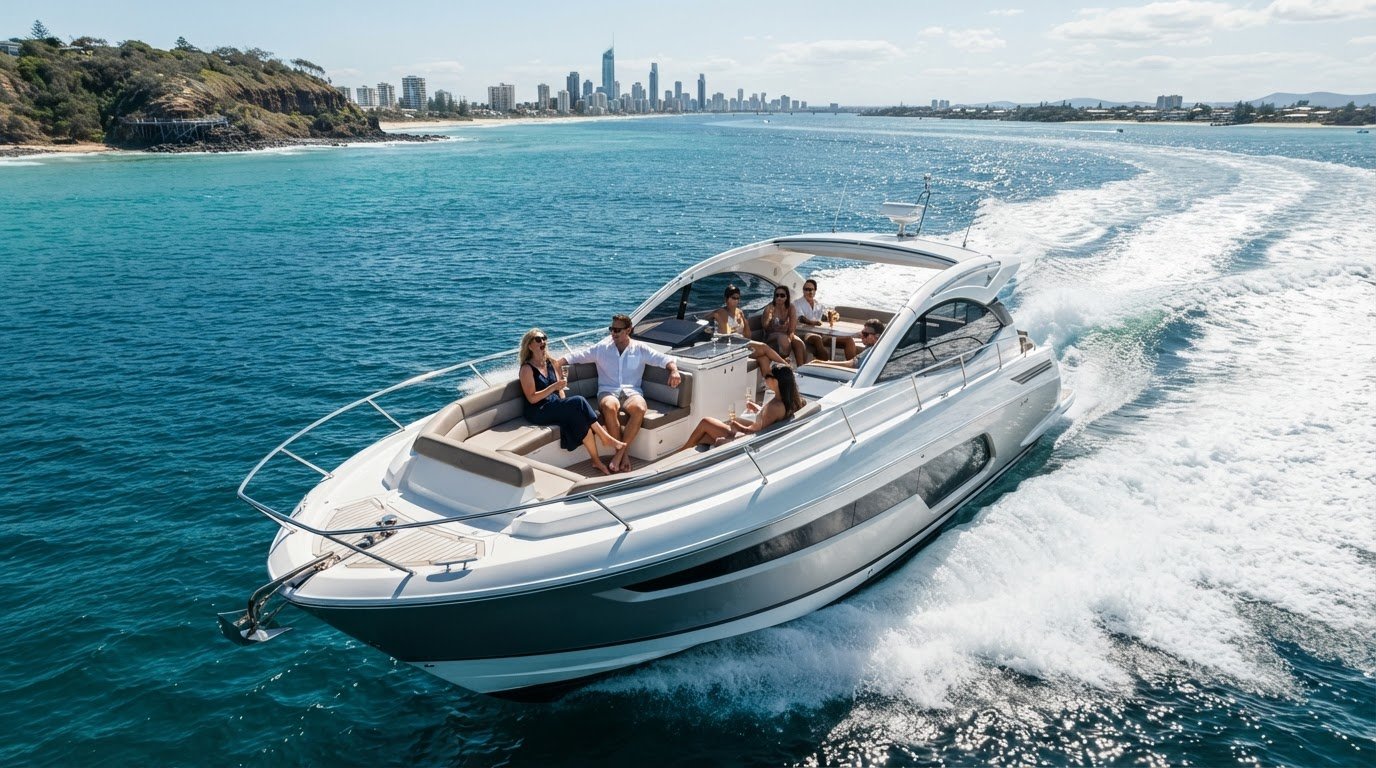
What if time on the water didn’t require taking on a yacht alone? For anyone considering luxury yacht syndication, a shared stake can offer another path to yacht ownership. Its value depends on more than the vessel: access, costs and responsibilities should be clearly set out, so owners know how bookings work and who looks after the yacht.
Before committing, it’s reasonable to ask what your share provides, how time is allocated when several owners want the same dates, and who manages the yacht between outings. This guide explains how yacht syndication is structured and what to check in the ownership and management arrangements. You’ll find practical questions about scheduling, vessel operations and maintenance, plus points to consider when comparing shared ownership with sole ownership or chartering. This can help you decide whether a managed share fits how often, and how easily, you want to spend time on the water.
Key Takeaways
- Check what legal or participation structure your share represents, and confirm the access rights in writing.
- Before joining a luxury yacht syndication gold coast arrangement, consider whether the booking process and shared access fit your preferred boating routine.
- Compare syndication with sole ownership and chartering by weighing control, flexibility and the responsibilities you’re prepared to take on.
- Review the syndicate’s written rules for member responsibilities, vessel care and how decisions are made.
- Understand what vessel management covers, including administration, logistics and operational oversight, before deciding whether managed ownership suits you.
What luxury yacht syndication means for prospective share owners
Luxury boating has an undeniable appeal: the freedom to spend time on the water without taking on every aspect of yacht ownership alone. For people exploring luxury yacht syndication gold coast, a shared arrangement may provide a way to participate in owning or using a yacht while distributing responsibilities among participants. The details matter. Each syndicate sets its own structure, access rules and operating arrangements.
In brief: yacht syndication is an arrangement in which several participants share an interest in, or participation in, an agreed vessel. Governing documents set out access and responsibilities. It differs from booking a one-off charter: a syndication share relates to an ongoing arrangement, while a charter generally provides use of a vessel for an agreed period without giving the customer an ownership share.
The broader concept of fractional ownership describes shared participation in an asset, with costs and management handled according to the arrangement. For yachts, what a share means in practice depends on the syndicate’s documents, not just how the opportunity is described.
How a yacht syndication share is generally structured
Participants hold an interest or defined participation in a vessel under an agreed structure. The documents should explain what that means in practice, including the rights attached to a share and the obligations each participant accepts.
The syndicate also sets access arrangements. Booking procedures, priority rules and ways to resolve competing requests can vary, so don’t assume your preferred dates or a particular amount of use are assured. Before committing, review the written terms for access, ongoing responsibilities, decision-making and exit provisions. If anything is unclear, seek appropriate independent advice.
Syndication, sole ownership, and chartering are different
With sole ownership, one owner has greater control over the yacht’s use, while also carrying the associated decisions and responsibilities. A syndicate shares participation but requires members to follow agreed access and operating rules. That trade-off may suit someone who values shared responsibility, but may feel restrictive if you want to decide independently when to go boating.
Chartering generally means arranging to use a yacht for an agreed period, rather than acquiring an ownership share. It may suit occasional boating without an ongoing stake, while syndication is structured around continuing participation. Neither option is automatically more flexible. Check the specific terms, booking process and responsibilities before deciding.
Neptune Oceanic offers yacht syndication shares. Comparing the written share arrangements with your boating habits is a useful first step in deciding whether this form of ownership is right for you.
How luxury yacht syndication manages access and vessel responsibilities
Shared ownership works best when practical details are clear before anyone plans a day aboard. In a luxury yacht syndication gold coast arrangement, members need to understand how to request access and how the vessel is cared for between uses. These are connected but distinct: member access rules govern who can use the yacht and when, while vessel management covers agreed operational work behind the scenes.
A member might start by checking a booking calendar and requesting a preferred date. Once a booking is confirmed, the syndicate’s procedures may explain what happens before departure, what members need to know while aboard, and how the yacht is returned and any issues reported. Processes vary, so treat this as a sequence to ask about, not a promise that every syndicate operates the same way. How fractional boat ownership works offers further background on shared boat ownership and management.
How members arrange and share time aboard
Before joining, inspect the booking system and written rules. Check how requests are prioritised, whether peak periods have different arrangements, and how far ahead members can plan. Ask what happens if plans change, a booking is cancelled, or two members want the same dates. Clear procedures help set expectations and reduce the chance of misunderstandings.
Confirm how handover, member conduct, return procedures and post-use communication are handled. Don’t assume access is equal, preferred dates are guaranteed, or a share provides a set number of boating days. The relevant terms should spell out what applies to that syndicate.
What professional vessel management may cover
Management can coordinate vessel operations, although the exact duties depend on the agreed service scope. Neptune Oceanic identifies administration, logistics and operational oversight as areas covered by its vessel management services. It also offers vessel maintenance and detailing to support yacht care.
Ask for the management scope in writing and check what’s included or excluded. Find out what updates members receive, how decisions are communicated, and where to direct an operational concern. Members should know who to contact and how an issue will be handled under the arrangement.
If you’re assessing how managed access and vessel responsibilities are set out, review Neptune Oceanic’s yacht syndication shares as one example of a professionally managed offering.
Does luxury yacht syndication suit you better than owning or chartering?
A shared yacht doesn’t offer the same control as owning a vessel outright. Syndication means coordinating access with other participants under rules set by the particular arrangement. For anyone weighing luxury yacht syndication gold coast, the useful question isn’t which option is universally best, but which trade-offs fit your boating routine.
Compare the practical details that shape your experience. These are general distinctions, not guarantees: actual rights, responsibilities and flexibility depend on the syndicate documents or, for chartering, the booking terms. A broader discussion of the trend of fractional ownership also places shared asset arrangements in context.
| Consideration | Syndication | Sole ownership | Chartering |
|---|---|---|---|
| Access | Set by member rules and scheduling arrangements. | Generally directed by the owner, subject to applicable requirements. | Arranged for an agreed period under booking terms. |
| Administration | May be shared or handled through an agreed management arrangement. | The owner coordinates or appoints support for administration. | Arrangements depend on the provider and booking. |
| Operational responsibility | Divided or managed as specified in the agreement. | The owner carries responsibility for coordinating vessel needs. | Defined by the charter terms and who is responsible for operating the vessel. |
| Flexibility | Balanced against other members’ access and the syndicate rules. | More direct control over decisions and use. | Limited to the options and dates available for booking. |
When a managed share may fit your boating habits
A managed share may suit people seeking recurring access who prefer not to coordinate every operational detail themselves. Before deciding, note how often you expect to go boating, which periods matter most, and who you’d typically bring aboard. Compare those preferences with the specific vessel, schedule and syndicate terms. Management can reduce the work you coordinate yourself, but you’ll still need to understand the member rules.
When sole ownership or chartering may be a better fit
Sole ownership may appeal if independent control and direct decision-making matter more than sharing responsibilities. Chartering may suit occasional outings when you’d rather arrange use without taking a share. The right choice depends on how often you’ll use a yacht, your preferred level of control, your tolerance for coordinating with others and the actual agreement. To explore one managed-share option, review Neptune Oceanic’s yacht syndication shares.
What to check before joining a luxury yacht syndicate
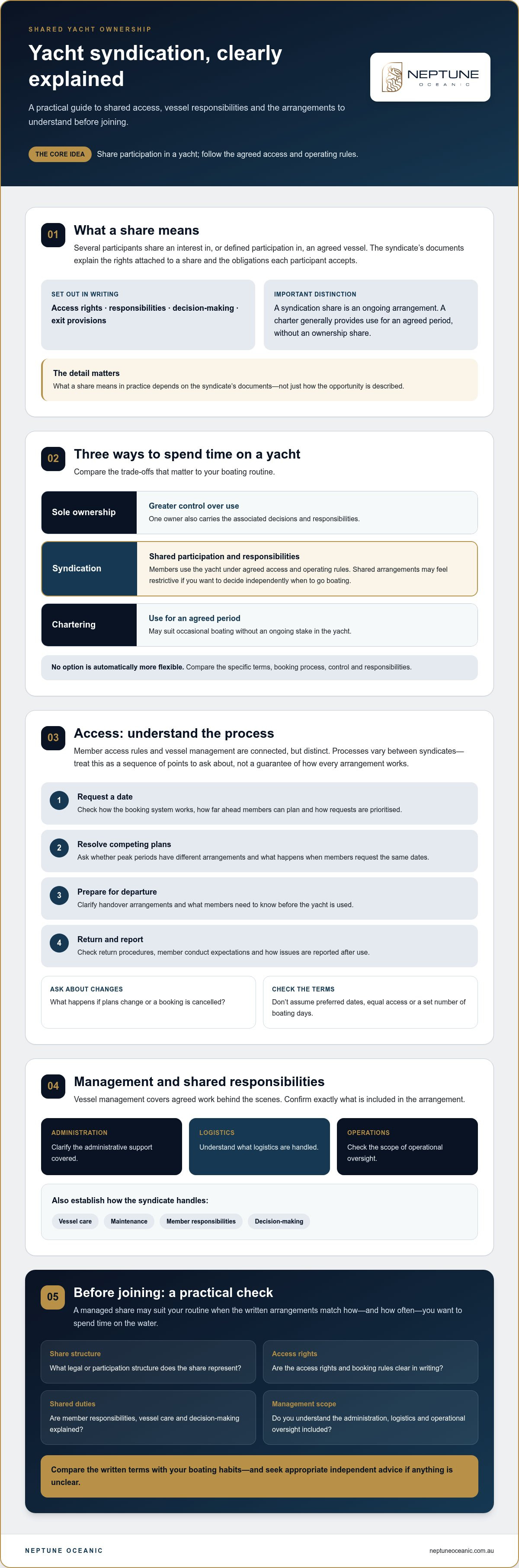
Before committing to a luxury yacht syndication gold coast share, work through the decision in order: define how you expect to use the yacht, read the written terms, understand what management covers, then resolve any unanswered questions. A polished presentation can introduce an opportunity, but the agreement is where access, obligations and responsibilities should be clear.
Start with your boating habits. Note how often you hope to go out, which dates or seasons matter, and who is likely to join you. Use that picture to assess whether the vessel and schedule described in the documents are practical for you. Then check that the written rules address access, member responsibilities, vessel care and decision-making.
Questions about the share, schedule and agreement
Ask what the share actually confers and what obligations come with it. Confirm how changes to the arrangement are documented, and read the relevant terms rather than relying on verbal explanations. Pay particular attention to how bookings are allocated, how peak periods are handled, and what happens after cancellations or scheduling conflicts.
Give exit terms the same attention as joining terms. Find out what the agreement says about transferring or selling a share, withdrawing from the syndicate and resolving disputes. These provisions vary between arrangements, so don’t assume another syndicate’s process applies.
Questions about management, maintenance and responsibilities
Ask which administration and operational tasks the manager performs, and which remain with members. Clarify how maintenance is planned, reported and approved, including how members are informed about work that may affect use. Request written details of what the management arrangement includes and excludes, and how concerns are escalated.
Insurance, safety and compliance details depend on the vessel and arrangement. Review the relevant records and seek advice from suitably qualified legal, financial or maritime professionals where your circumstances require it. Don’t treat general information or an informal assurance as a substitute for checking the documents and getting appropriate advice.
Quick checklist: Ask what the share provides, how access works, who handles each responsibility and how decisions are made. Terms that need individual review include ownership structure, financial and legal obligations, insurance and safety arrangements, and any transfer, exit or dispute provisions.
Once you’ve clarified your priorities, explore Neptune Oceanic’s yacht syndication shares and consider how the documented arrangement aligns with your questions.
Explore professionally managed yacht syndication with Neptune Oceanic
Once you’ve clarified the access, responsibilities and terms you need from a syndicate, compare those expectations with the provider’s offering. Neptune Oceanic provides yacht syndication shares and vessel management services covering administration, logistics and operational oversight. This support can help manage the practical complexity behind shared yacht ownership.
That support doesn’t replace the need to understand the share itself. For any luxury yacht syndication gold coast enquiry, check the specific vessel arrangements and documents rather than assuming every share has the same access, inclusions or management scope. Neptune Oceanic also offers vessel maintenance and detailing, but confirm whether either service applies to the arrangement you’re considering.
What to ask Neptune Oceanic about its yacht share arrangements
Before deciding whether an option suits you, ask about current vessel choices, how access is arranged and which terms apply. Find out what the management service covers, which responsibilities remain with members, and how operational updates are communicated. These details help you assess whether the practical experience aligns with your boating plans.
Be specific. Ask how bookings are managed, what rules apply when plans change, and how members are informed about vessel care or operational matters. Request the relevant information in writing, including any exclusions or processes that affect your use. Availability and specific inclusions can change, so confirm current details directly rather than relying on general descriptions.
A considered next step towards shared yacht ownership
Start with your own needs. Define how often you’d like to go boating, when you hope to use the yacht and what level of coordination feels comfortable. Then review the applicable documents and raise questions about access, member responsibilities, management, maintenance and decision-making. If a term is unclear, seek suitable independent advice before proceeding.
There’s no need to rush the assessment. A clear understanding of the arrangement can help you decide whether managed shared ownership fits the way you want to spend time on the water. To review the information available about Neptune Oceanic’s yacht share options, explore yacht share information.
Make shared yacht ownership a considered choice
Luxury yacht syndication offers a way to share participation in a vessel, but the experience depends on the agreement behind the share. Before deciding, consider how often you plan to go boating, how much control you want over dates, and whether you’re comfortable coordinating access with other members.
Read the written terms carefully. Confirm what the share provides, how bookings and responsibilities are arranged, and what management covers. For anyone exploring luxury yacht syndication gold coast, these practical details matter as much as the appeal of time on the water.
Neptune Oceanic provides yacht syndication shares and vessel management services covering administration, logistics and operational oversight. To explore professionally managed yacht share options and ask about the specific arrangements, explore yacht share options.
With clear expectations and the right information, you can decide at your own pace whether shared ownership fits the way you want to enjoy boating.
Frequently Asked Questions
What is luxury yacht syndication?
Luxury yacht syndication is a shared arrangement that lets participants hold an interest in, or participate in, an agreed yacht under defined terms. The structure, rights and responsibilities depend on the syndicate’s documents. People searching for luxury yacht syndication gold coast should look beyond the vessel and check how access, operating responsibilities and member obligations are organised before considering a share.
How does a yacht syndication share work?
A yacht syndication share provides participation in a vessel under an arrangement that sets out members’ rights and responsibilities. The documents should explain what the share confers, how access is scheduled, how operating tasks are handled and what obligations apply. For example, check how bookings are requested and how competing date preferences are resolved. Don’t assume every syndicate uses the same ownership structure, access system or management arrangements.
Is yacht syndication the same as chartering?
No. Syndication is an ongoing shared-ownership or participation arrangement, while chartering generally means arranging to use a yacht for a particular period without acquiring a share. A syndicate involves reviewing continuing terms, such as access rules and member responsibilities. Charter arrangements have their own booking conditions. Compare what each option allows and requires, rather than assuming one will always be more flexible or better suited to your boating habits.
Can syndicate members choose when they use the yacht?
Members can request dates according to the syndicate’s booking system, but access depends on its rules and other members’ requests. Check how far ahead bookings can be made, whether priority or peak-period arrangements apply, and what happens if dates conflict or plans change. Don’t assume you can use the yacht whenever you choose or that particular dates are guaranteed. The written agreement should explain the process that applies.
How much does a luxury yacht syndication share cost?
There isn’t one standard price for a luxury yacht syndication share. The amount depends on the specific vessel and arrangement, and any ongoing contributions or other charges should be confirmed from current documents. Ask for a clear breakdown in Australian dollars (A$), including what each amount covers and when it may be payable. Availability and terms can change, so verify current details before making a decision.
What happens if a yacht syndicate member wants to leave?
The process depends on the syndicate agreement. Before joining, check what it says about transferring or selling a share, withdrawing, any approval steps and how disputes are handled. Confirm how changes are documented and whether leaving affects outstanding responsibilities. Don’t rely on assumptions or verbal explanations. Read the applicable terms and seek independent legal or financial advice if you need help understanding your rights and obligations.
Who manages maintenance in a yacht syndicate?
Maintenance responsibility depends on the syndicate’s agreement and management scope. A professional manager may coordinate vessel administration, logistics and operational oversight, while members may retain responsibilities set out in their terms. Ask how maintenance is planned, communicated and approved, and what records or updates members receive. Neptune Oceanic provides vessel management, maintenance and detailing services, but confirm directly which services apply to the particular share you’re considering.
Disclaimer
The content published on this blog reflects the views and experience of Neptune Oceanic and is provided for informational purposes only. While every effort is made to ensure accuracy, we make no representations or warranties regarding the completeness or suitability of any information for your individual circumstances. Nothing in this blog should be construed as financial, legal, or investment advice. All financial figures, cost estimates, and usage statistics are indicative only and may vary depending on vessel, location, and market conditions. Neptune Oceanic is a member of the Boating Industry of Australia (BIA).