
Motor Yacht Syndication in Australia: A Buyer’s Guide
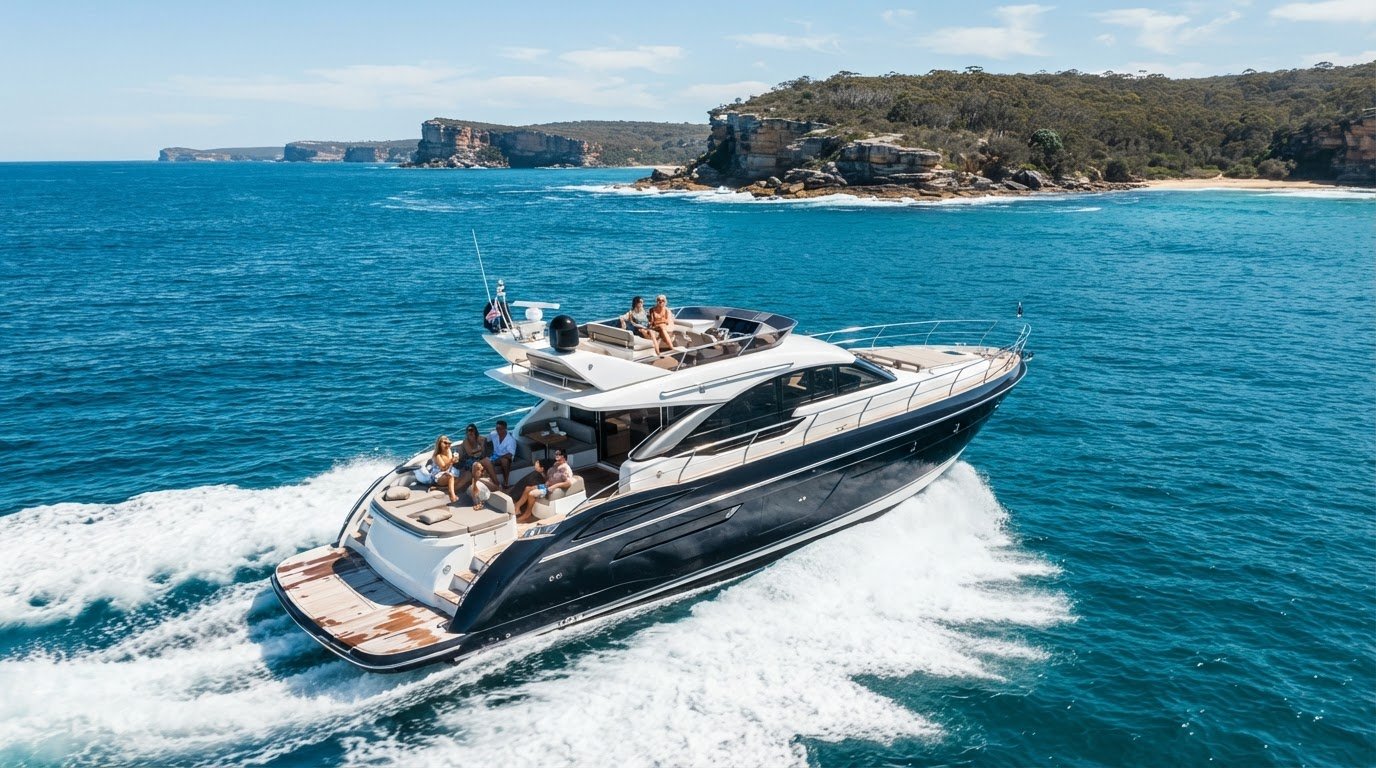
A share price can look appealing, but it won’t tell you whether a syndicate suits the way you want to use a boat. If you’re considering motor yacht syndication australia, look beyond the share itself: check how access is allocated, what happens when owners request the same dates, and who arranges the vessel’s upkeep.
Shared ownership can make boating more accessible than sole ownership, while professional management may reduce the routine work involved in each outing. It’s reasonable to want clear answers about responsibilities and decision-making before committing. The right choice depends on how the arrangement works in practice, not just its headline price.
This guide explains what a motor yacht syndicate involves and how it compares with sole ownership and other shared-use models. Use the questions and checks below to assess the share structure, booking system, agreement and management arrangements before making an enquiry.
Key Takeaways
- Assess motor yacht syndication australia by checking how the ownership structure translates into practical use.
- Review booking rules, peak-period access and maintenance arrangements against the way you expect to use the yacht.
- Compare syndication, sole ownership and boat-club membership across control, access, administration and shared responsibilities.
- Review the agreement, vessel condition, maintenance approach and available records before deciding whether to proceed.
- Consider whether professionally managed shared access suits your needs, or whether greater personal control matters more.
What motor yacht syndication in Australia means for a buyer
Want to enjoy a well-appointed motor yacht without taking on every task and decision involved in sole ownership? A structured syndicate can offer a different balance, but the detail is in the terms. For buyers considering motor yacht syndication australia, establish what the share entitles you to, how use is organised and which responsibilities remain yours.
Motor yacht syndication is a documented shared-ownership arrangement in which participants hold defined interests in a vessel, with access, responsibilities and governance set by the programme’s terms. It differs from casual boat sharing, where people may arrange to use a vessel without acquiring an ownership interest or following a formal co-owner framework. The concept is related to fractional ownership, but the legal and practical arrangements can differ between syndicates.
How a motor yacht syndicate is structured
The written agreement should explain how ownership is held, who makes decisions and how the vessel is operated. Some arrangements may use a company or another ownership entity, so don’t assume a share gives you the same rights as direct personal ownership. Ask to review the relevant documents and identify the ownership entity before proceeding. Share size, access rights and responsibilities vary by programme.
What the buyer receives beyond time on the water
A share may provide a defined way to access the yacht and participate in shared responsibilities. Professional oversight may also coordinate administration, logistics and operational matters. What’s included or arranged depends on the programme. Separate ownership rights from management services: check which tasks the manager undertakes, what costs or duties remain with owners, and what the agreement says about decisions and upkeep. For an overview of different models, explore boat share programmes in Australia.
Treat the share as one part of the arrangement, not the whole experience. Before enquiring, compare the documented rights with the practical access and support you expect. That gives you a clearer basis for deciding whether a managed syndicate suits your time on the water, without assuming every provider operates in the same way.
How access, scheduling and management work in a yacht syndicate
A share is useful only if its access rules fit your boating plans. Look beyond general statements about availability and find out how bookings work day to day. For buyers weighing motor yacht syndication australia, clear allocation rules and a process for changing plans can make shared use easier to organise. Access still depends on the programme’s rules, other owners’ bookings and the vessel’s availability.
Access rights determine when and how you may use the yacht; vessel-management responsibilities determine who coordinates its upkeep and operation. The agreement should explain these separately, so you can see what your share provides and what the manager is responsible for.
Questions to ask about booking and fair access
Ask to see the booking rules and how they apply during ordinary and high-demand periods. Check how reservations are made, confirmed, cancelled or changed, and how competing requests are resolved. Then compare those rules with your likely use. If you mainly want to boat during popular periods, ask how those dates are allocated rather than assuming every owner has equal first choice.
- How are bookings made, confirmed and changed?
- Are there limits or special rules for busy periods?
- What happens if a booking is cancelled or the yacht becomes unavailable?
- How are disagreements about access handled under the agreement?
A clear process won’t remove every scheduling constraint, but it gives owners a shared reference when plans change and helps set realistic expectations before joining.
What professional vessel management can cover
Depending on the programme, a manager may coordinate administration, logistics and operational oversight. Confirm the scope in writing. Ask which maintenance and detailing tasks are included, which are excluded or arranged separately, and how planned work is communicated to owners. Maintenance can affect availability, so ask how owners are notified if work changes a booking and what the agreement says about those changes.
For broader context on Australian maritime safety, Superyacht Australia’s overview can help frame questions about applicable requirements. Ask the programme manager which obligations apply to the specific vessel and how operational matters are overseen. Don’t assume every vessel or use arrangement is treated identically.
To understand what a share offering sets out, review yacht share information alongside these questions. Compare the documented booking process and management scope with your expected use before deciding whether the arrangement suits you.
Compare motor yacht syndication with sole ownership and other options
The right way to enjoy a motor yacht depends on how often you plan to use it, how much control you want and whether you’re prepared to coordinate its care. When assessing motor yacht syndication australia, compare the actual terms with the alternatives rather than treating any one model as the default choice.
| Model | Control | Access | Administration and responsibilities |
|---|---|---|---|
| Syndication | Shared decision-making follows the agreement and governance arrangements. | Use is allocated under programme rules, which may include booking procedures and peak-period arrangements. | Responsibilities are shared as set out in the terms; professional management may handle agreed operational tasks. |
| Sole ownership | The owner generally has greater direct control over decisions for their vessel. | Access is not shared with co-owners, although use still depends on the vessel’s condition and maintenance needs. | The owner arranges or oversees the vessel’s administration, upkeep and operation. |
| Boat-club membership | Access is based on membership terms, not ownership of a particular vessel. | Use depends on the club’s booking rules and available fleet. | Check what the membership covers and which responsibilities remain with the member. |
| Chartering | Use is governed by the charter agreement, not a co-owner governance arrangement. | Access is for the agreed charter period and subject to its terms. | Confirm what the agreement includes and what the user must arrange. |
Syndication versus owning a yacht outright
Sole ownership may suit buyers who value direct control, expect to use the vessel often and are willing to organise its ongoing care. Syndication provides a shared structure: access and decisions follow documented rules, while a professional manager may coordinate administration, logistics and operational oversight if those services are included in the programme. Compare your expected use, preferred level of control and willingness to take on routine responsibilities.
Syndication versus a boat club or charter
These models aren’t interchangeable. A syndicate share involves an ownership interest defined by its documents. Club membership provides access under membership terms, while chartering allows use for an agreed period without making the user a co-owner. In every case, examine the legal rights, booking conditions and included services. Use a boat-club-versus-syndication guide to compare the models and a yacht-share agreement guide to consider ownership terms. Yacht share information can provide a reference point, but confirm the specific programme documents before proceeding.
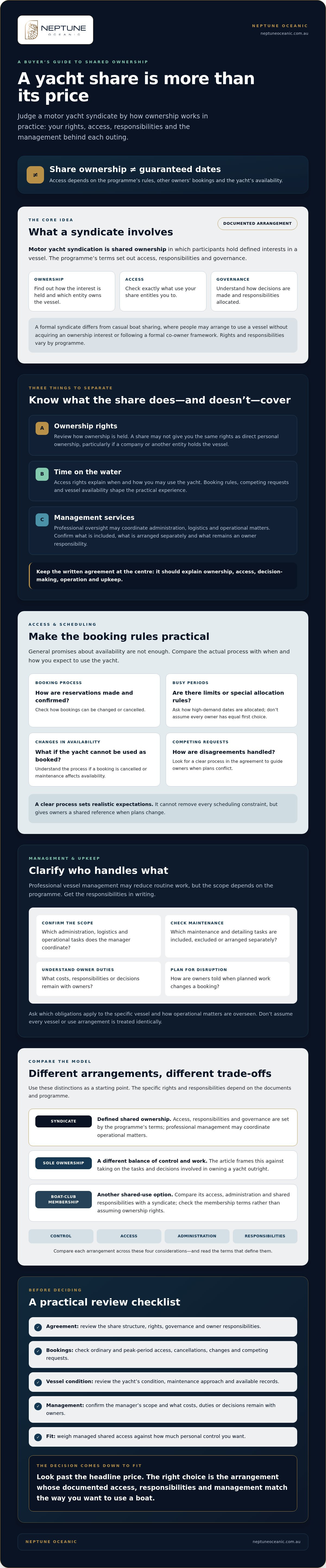
What to check before joining an Australian motor yacht syndicate
A polished presentation can make shared boating sound effortless, but your experience depends on the arrangements behind it. Before committing to motor yacht syndication australia, assess the agreement, access rules, vessel condition and management process together. Each shapes what you can expect as a co-owner.
The agreement is central to shared ownership because it defines the ownership structure, each participant’s rights and responsibilities, how decisions and access are managed, and what happens if circumstances change. Read it in full and seek independent legal or financial advice if you’re unsure how a term applies to you. Where the written documents should provide clarity, don’t rely on verbal explanations.
Read the agreement before assessing the lifestyle
Start with the practical terms, not just the promise of time on the water. Confirm who holds the ownership interest, how decisions are made and which responsibilities belong to co-owners, the manager or another party. Check the provisions for booking changes, disagreements and leaving or transferring a share. If you’re using a yacht-share agreement guide, compare its questions with the actual documents and ask for unclear wording to be explained before proceeding.
- How are access rights and booking conflicts handled?
- Who can approve decisions, and what requires owner agreement?
- What are the process and conditions for exiting or transferring a share?
- How will owners receive updates about decisions, maintenance and changes to arrangements?
Assess vessel care, safety and operating processes
Ask to review information about the yacht’s condition, maintenance approach and available service records. Find out how planned work is scheduled and communicated, and whether maintenance or detailing is included, excluded or arranged separately. A manager may coordinate administration, logistics and operational oversight, but confirm the specific scope rather than assuming every programme covers the same tasks.
Clarify who owners contact with questions and how operational updates are shared. Ask what procedures apply before use and how the manager will communicate if maintenance or other circumstances affect availability. These details show how responsibilities are handled, not just who is named in the agreement.
Safety and regulatory obligations can depend on the vessel and how it is operated. A general description may not establish what applies to a particular arrangement. Confirm relevant requirements with the Australian Maritime Safety Authority or other appropriate authorities, and seek qualified advice on legal, compliance or tax questions before relying on an interpretation.
After reviewing the documents and due-diligence points, explore yacht share information as one step in evaluating the arrangement.
Is a professionally managed yacht share the right next step?
A managed share may suit buyers who want structured access to a motor yacht but don’t expect to use one often enough to justify sole ownership, or who prefer not to coordinate every operational task themselves. It may be less suitable if you want full control over when the vessel is used, how decisions are made or how it is maintained. With motor yacht syndication australia, suitability depends on the specific programme, not just the appeal of shared ownership.
A practical suitability check for prospective co-owners
Compare your likely boating plans with the programme’s confirmed booking arrangements. Consider how flexible you can be with dates, especially if your preferred periods are in high demand. Then decide whether you’re comfortable sharing decisions and following agreed responsibilities. If important details remain unclear, get answers in writing before making a commitment.
- Expected use: Does the access allocation align with how often and when you want to boat?
- Access rules: Do you understand how reservations, busy periods and schedule changes are handled?
- Management scope: Are the manager’s responsibilities clear, including what is and isn’t covered?
- Agreement clarity: Can you explain your ownership rights, obligations and options if circumstances change?
If sole control matters more than shared responsibility, owning a yacht outright may better match your preferences. If you value an agreed framework and are comfortable with co-ownership, a managed syndicate could be worth exploring.
Explore a managed yacht share with confidence
Neptune Oceanic focuses on yacht syndication shares and professional vessel management in Australia. Management can cover administration, logistics and operational oversight, while maintenance and detailing support vessel condition and presentation. Confirm the share structure, access allocation, vessel details and inclusions for the programme you’re considering.
Once you’ve weighed your expected use, access rules, management scope and agreement terms, you can explore yacht share opportunities. If a share looks relevant, ask for current programme information and clarify any unanswered questions about suitability before deciding whether to proceed. Reviewing the details first can help you approach shared boating with clearer expectations.
Make your next boating decision with clarity
The right ownership model is the one that fits how you plan to use a yacht. Assess motor yacht syndication australia by looking beyond the share itself: confirm how access is allocated, what the agreement says about shared decisions and responsibilities, and which management tasks are covered. Compare those details with sole ownership or club membership to see which balance of control and support suits you.
Neptune Oceanic specialises in professionally managed yacht syndication programmes. Vessel management can cover administration, logistics and operational oversight, while maintenance and detailing support vessel care and presentation. The scope depends on the programme, so review its current terms and details before deciding whether a share is right for you.
Ready to assess whether a share suits your boating plans? Explore yacht share opportunities and request the information you need to make an informed decision.
Frequently Asked Questions
What is motor yacht syndication in Australia?
Motor yacht syndication in Australia is a structured shared-ownership arrangement where participants hold interests in a vessel and follow agreed terms for access, responsibilities and decision-making. It’s more formal than casually sharing a boat, but arrangements differ between programmes. Before considering a share, check the ownership structure, written agreement and rights the share provides. These documents explain how the arrangement works in practice.
How does yacht syndication work?
In a yacht syndicate, participants share ownership under an agreed structure, while programme documents set out access and responsibilities. Booking rules may explain how reservations, busy periods, cancellations and changes are handled. A manager may coordinate agreed operational tasks, but the scope varies. Review the agreement and management details to understand how decisions are made, what you’re responsible for and how use of the vessel is organised.
Is yacht syndication the same as a boat club?
No. Syndication involves an ownership interest in a vessel, with rights and responsibilities determined by the relevant documents. A boat club generally provides access through membership terms, without giving members an ownership stake in a particular yacht. Booking processes, available vessels and included services can differ. Read the applicable terms for either model to understand what you can use, what responsibilities apply and how access is allocated.
Can I use a yacht whenever I want in a syndicate?
Not necessarily. Use depends on the syndicate’s access allocation, booking rules and other owners’ reservations. Maintenance may also affect availability. Check how the programme handles popular dates, cancellations, schedule changes and competing booking requests, then compare those rules with when you expect to go boating. If you need access at short notice or on particular dates, ask whether the documented arrangements can accommodate that before committing.
What should I check in a yacht share agreement?
Check who owns the vessel, what rights your share provides, how access and decisions are managed, and which responsibilities sit with owners or a manager. Look for clear terms covering disagreements, changes to arrangements and the process for leaving or transferring a share. Confirm that verbal explanations match the written agreement. If ownership, legal or tax terms aren’t clear, seek advice from an appropriately qualified professional before signing.
Is a professionally managed yacht share right for me?
A professionally managed share may suit you if its access arrangements match your expected use and you value support with agreed operational tasks. It may be less suitable if you want sole control over bookings, decisions and vessel care. When assessing motor yacht syndication australia, compare the booking rules, management scope and agreement with your priorities. Clarify unanswered questions and confirm current programme details before deciding whether to proceed.
Who handles maintenance in a yacht syndicate?
Responsibility for maintenance depends on the syndicate agreement and management arrangements. A professional manager may coordinate vessel operations, administration and logistics, while maintenance and detailing may be included, excluded or arranged separately. Ask who organises routine work, whether service records are available for review and how planned maintenance is communicated to owners. Confirm how maintenance-related changes to access are handled rather than assuming management means the yacht is always available.
Disclaimer
The content published on this blog reflects the views and experience of Neptune Oceanic and is provided for informational purposes only. While every effort is made to ensure accuracy, we make no representations or warranties regarding the completeness or suitability of any information for your individual circumstances. Nothing in this blog should be construed as financial, legal, or investment advice. All financial figures, cost estimates, and usage statistics are indicative only and may vary depending on vessel, location, and market conditions. Neptune Oceanic is a member of the Boating Industry of Australia (BIA).